
Why are students protesting in France?
The protests are fueled by a systemic failure in the French secondary school system, specifically within the lycées. Students report a wide array of grievances ranging from basic infrastructure deficits to severe logistical challenges. In cities like Lille, pupils have described having to search for chairs at the start of every lesson due to insufficient furniture, while others struggle with overcrowded canteens where thousands of students must be served within a limited 50-minute window.
Social media has amplified these concerns, with videos circulating on TikTok and Instagram showing:
- Rodent infestations in school corridors.
- Damaged facilities, including broken toilets, holes in walls, and mouldy ceilings.
- Extreme temperature fluctuations, such as unbearable summer heat and freezing winter classrooms.
Beyond physical infrastructure, the anger is directed at structural issues such as long school hours, chronic shortages of teaching staff, and an unpopular university admissions system. For many students, the issue is not just about isolated incidents like rodents, but a fundamental belief that their education is being neglected by the state.
How are teachers and students responding to the crisis?
The movement has expanded beyond the student body to include educators who share the same frustrations. Teachers have joined the demonstrations, citing the impossibility of providing adequate attention to students in current conditions. Marine Monins, a secondary school teacher in Lille, highlights the logistical chaos caused by poor planning and staffing gaps, noting that school days can run from 8am to 6pm but are frequently interrupted by hours-long gaps.
Classroom density is another major point of contention. In France, classes are typically packed with approximately 35 pupils, a figure significantly higher than the English secondary school average of fewer than 23 pupils. This overcrowding makes individualized instruction nearly impossible, according to educators on the ground.
The Government's Attempt at Concessions
The French government has attempted to de-escalate the situation through targeted measures. On Thursday, authorities promised the deployment of 3,000 additional supply teachers to address immediate staffing gaps. Prime Minister Sébastien Lecornu has also committed to unveiling a comprehensive response plan by the end of October, with ministers suggesting that school resources could be revisited during next year's budget negotiations.
However, these gestures have largely failed to satisfy the protesters. At barricaded school gates across the country, the government's promises have been met with widespread skepticism. For many participants, the demands go far beyond physical repairs; they represent a deeper feeling of being abandoned and unheard by the political establishment.
What is the impact of the unrest on law enforcement and youth relations?
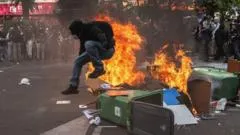
The demonstrations have frequently turned violent, leading to significant legal and physical consequences for both protesters and police. According to the interior ministry, almost 7,000 people have been detained during the recent disorder, with children making up more than 85% of those arrests. On the other side, more than 700 police officers have sustained injuries over a three-week period.
The relationship between the youth and the state has been severely strained by the tactics used during confrontations. Rights groups and unions have criticized the police for using heavy-handed methods against minors, including the use of batons, tear gas, and non-lethal flash-ball guns. One particularly severe incident in the city of Lens involved a 15-year-old boy who lost his hand during a confrontation; while police sources suggest the boy may have picked up a discharged sting-ball grenade, witnesses have contested this account.
In response to the backlash, police have been banned from using stun grenades during school-related protests. Despite this, students continue to report fear of facing riot police. Some students have also noted that the presence of agitators—individuals who join protests to throw fireworks at officers rather than to advocate for educational reform—has complicated the message the students wish to send to the world.
How is the education crisis influencing French politics?
The unrest is acting as an accelerant for France's existing political polarization. As the 2027 presidential election approaches, politicians from the hard right and hard left are actively engaging with the movement. An Ipsos survey conducted for Aix-Marseille University indicates that over 75% of French citizens under the age of 30 are worried about the state of their country, reflecting a growing sense of instability.
The political landscape is currently defined by several key figures:
- Marine Le Pen (National Rally): The current frontrunner for the 2027 election, who has focused on condemning vandalism and advocating for the "casseur-payeur" principle, where those responsible for damage must pay for repairs.
- Édouard Philippe: A former Prime Minister and founder of the centre-right party Horizons.
- Jean-Luc Mélenchon (France Unbowed): A veteran hard-left politician who has become a prominent figure at rallies, claiming the movement is the most potent since the 1968 uprisings.
The crisis presents a massive challenge for President Emmanuel Macron. Unlike previous protests like the "gilets jaunes," which focused on specific tax legislation, the education crisis requires wholesale structural reform. Such changes—including building new classrooms, hiring thousands of teachers, and addressing the national debt—would require billions of euros and years of implementation. This is particularly difficult given that the annual cost of servicing France's national debt now exceeds the core state education budget.
Frequently asked questions
What are the main causes of the France school protests?
The protests are driven by deteriorating conditions in French secondary schools (lycées). Key issues include chronic staff shortages, overcrowded classrooms of up to 35 students, dilapidated buildings with mould and broken facilities, and inadequate resources like sufficient seating and functional canteens.
How many people have participated in the demonstrations?
Participation numbers vary depending on the source. The French government reported that approximately 250,000 people marched, whereas trade unions estimated the number of participants to be closer to half a million.
What is the political significance of these protests?
The protests are occurring ahead of the 2027 presidential election and are being used by political figures on both the hard left and hard right to highlight the government's perceived inability to manage the country's social and educational crises.
How has the police response affected the protesters?
The use of heavy-handed tactics, such as tear gas and flash-ball guns, has led to hundreds of injuries among students and teachers. This has caused significant friction, with some educators fearing it will permanently damage the democratic relationship between French youth and the state.
Can the government quickly resolve the education crisis?
A quick resolution is unlikely because the issues are structural. Solving them requires massive financial investment in infrastructure and staffing at a time when France's national debt servicing costs exceed the core education budget.
Key takeaways
- Protests involve between 250,000 and 500,000 participants across France.
- Over 85% of the 7,000 detainees are children, according to the interior ministry.
- Class sizes in France average 35 pupils, compared to under 23 in England.
- The 2027 draft budget proposes a 1.7% increase in education spending.
Conclusion
The unrest in France's schools is more than a dispute over classroom facilities; it is a manifestation of deep-seated social and political fractures. While the government attempts to address immediate grievances through temporary staffing increases, the underlying issues of underfunding and structural decay remain. As the political landscape shifts toward the extremes, the education crisis serves as a potent symbol of a generation that feels unheard. The ability of the state to address these systemic failures will likely play a decisive role in the stability of France leading into the 2027 elections.




