
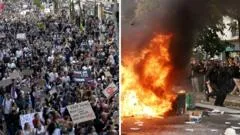
Nationwide demonstrations expand across France
A massive wave of demonstrations has spread across the country, beginning with high-school pupils and rapidly expanding to involve a much broader demographic. Hundreds of thousands of people have taken to the streets, as the movement grew to include parents, university students, and various labor unions in a widespread show of mobilization.
In Paris, large crowds of teenagers organized marches starting from the Place de la République. These demonstrators were specifically calling for more resources to be allocated to schools. Additionally, the protesters voiced opposition to what they described as a need for less repression from the police during these public gatherings.
Police response and clashes in major cities
Law enforcement engaged with demonstrators in several major urban centers, leading to various confrontations and the use of crowd-control measures. In Paris and Marseille, police used tear gas to manage the crowds, while in Rennes, authorities deployed water cannons against protesters. Further clashes between riot police and demonstrators were reported in Lyon.
Despite these instances of police intervention and the use of tear gas and water cannons, the scale of the unrest remained somewhat contained compared to previous historical movements. Reports indicated that there was little of the serious trouble that had marred previous protests in the country.
Demands and movement dynamics
The movement highlights a dual focus on the state of the educational system and the methods of law enforcement. While the mobilization is vast, encompassing students, parents, and unions, the nature of the clashes suggests a different intensity than past civil unrest. The protesters continue to demand better funding for schools and a change in how police interact with demonstrators during such public gatherings.
