
What sparked the protests across France?
The unrest is rooted in a growing wave of social discontent. Student demonstrations, which originally began last month, escalated significantly on Saturday when they were joined by trade union members and various anti-government groups. This convergence transformed a student movement into a massive national mobilization.
The scale of the participation was significant, with approximately 550,000 demonstrators taking to the streets. The primary drivers for this movement include rising fuel prices, the general cost of living, and a perceived deterioration in public services, specifically within the school system. While the core of the protests was driven by these legitimate economic and social demands, the sheer volume of participants provided a backdrop for the subsequent disorder.
How did demonstrations turn into riots?
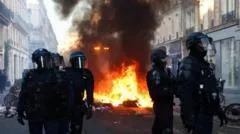
While the vast majority of the 550,000 protesters engaged in largely peaceful demonstrations, the situation devolved into violence in several major urban centers. Groups of rioters, some identified by their attire—wearing black clothing, masks, and balaclavas—emerged in Paris, Marseille, and other towns and cities. These groups engaged in direct confrontation with authorities and property.
The violence manifested through the setting of fires to cars and buildings, as well as widespread looting. According to the interior ministry, these actions led to the arrest of approximately 2,400 people. In Paris, the response from security forces included the use of tear gas and stun grenades against crowds of hundreds, while police were also seen using batons in several locations. The transition from protest to riot was marked by this shift from expressing grievances to active destruction and confrontation.
Damage to historic sites
The impact of the unrest extended beyond commercial property to include significant cultural and civic heritage. In Limoges, the destruction was particularly severe; the city's ornate 19th-century city hall was gutted by a fire started by rioters on Saturday. The intensity of the blaze caused the building's clock tower and roof to collapse, leaving the structure in ruins.
Local residents expressed profound sadness and anger at the loss of such landmarks. Annèyse, speaking near the ruined Limoges city hall, described the act of harming heritage buildings as "selfish," noting that such destruction hurts everyone. Another resident, Gerrard, called the situation "awful and unbelievable," noting the long recovery time required to restore the building to its former state. These incidents highlight a dimension of the unrest that moves beyond economic protest into the destruction of shared national identity.
What measures did Macron announce?
In a national address delivered from the Élysée Palace, President Emmanuel Macron sought to stabilize the country by calling for "calm and order." He addressed the duality of the situation, stating that a clear distinction must be drawn between the "legitimate demands" of the protesters and the actions of "those who destroyed, smashed and looted." Macron emphasized that "nothing justifies" the "unbridled" violence that occurred and warned those involved that they would face justice.
To prevent further escalation and protect the nation's infrastructure, Macron announced that local prefects and mayors would be tasked with drafting specific measures to protect shops and civic buildings. Furthermore, in response to concerns regarding the conduct of security forces—who utilized tear gas, water cannons, and batons—the President pledged that there would be "full transparency" regarding the police response to the demonstrations. His address was an attempt to validate the public's anger while simultaneously condemning the criminal elements that hijacked the movement.
How have political figures reacted?
The violence has exacerbated existing political fractures in France, particularly as the country prepares for an election in April. The political response has been sharply divided, reflecting the country's deep ideological splits.
Interior Minister Laurent Nuñez provided a specific characterization of the perpetrators, attributing the "outrages" to "several thousand far-left individuals" who targeted public buildings and confronted police. He further noted that they were later joined by "delinquents" who focused on looting and ransacking businesses. This was met with sharp criticism from Jean-Luc Mélenchon, leader of the hard-left La France Insoumise party, who accused Nuñez and police chiefs of "complete incompetence" and labeled them "specialists in organised chaos."
On the other side of the spectrum, Marine Le Pen, leader of the hard-right National Rally party, condemned the "exploitation" of public anger by political forces that encourage violence. These clashing narratives suggest that the unrest will serve as a major flashpoint in the upcoming election, where the hard-right and hard-left are expected to face off.
What is the current situation in affected cities?
As of Sunday, the scale of the disorder had decreased slightly in some areas, but the impact remained heavy. In parts of the capital and Lyon, looting and clashes with police continued on a smaller scale. In Paris, the morning of Sunday saw shopkeepers amidst the debris, picking up large shards of glass while municipal rubbish trucks worked to clear the streets of the previous day's destruction.
The human cost to the state was also significant. The interior ministry reported that approximately 1,000 police officers were injured on Saturday, with seven of those injuries classified as serious. While the immediate peak of the violence may have passed, the physical and social cleanup remains an ongoing process in cities like Paris, Marseille, and Lille, which all experienced widespread looting and property damage.
FAQ: France riots and protests
How many people protested on 17 October?
Official counts placed participation at approximately 550,000 across France. The majority of these events were described as largely peaceful protests against rising fuel costs and the cost of living.
How many arrests were made?
According to France's interior ministry, approximately 2,400 people were arrested in connection with the demonstrations and subsequent disorder.
Were any police officers injured?
Yes. The interior ministry reported that about 1,000 police officers were injured on Saturday, with seven of those injuries being serious.
Which cities saw the most damage?
Widespread looting and violence occurred in Paris, Marseille, and Lille. Limoges also saw significant damage, specifically to its 19th-century city hall, which was gutted by fire.
What happens next?
President Macron has directed local mayors and prefects to implement measures to protect shops and civic buildings. Additionally, the government has promised full transparency regarding the police response, and those involved in the violence are expected to face justice.
Key takeaways
Approximately 550,000 people joined protests on 17 October against fuel prices and declining public services. The demonstrations turned into widespread rioting and looting in cities including Paris, Marseille, Lille, and Limoges, resulting in 2,400 arrests and 1,000 police injuries. The historic city hall in Limoges suffered severe structural damage from fire. President Macron has called for calm, promised transparency in policing, and directed local authorities to increase protections for property. The unrest has intensified political divisions ahead of France's upcoming April election.
Conclusion
The weekend of 17-18 October marked one of the most intense periods of civil disorder in modern French history. While the movement was fueled by legitimate economic grievances regarding the cost of living and public services, the descent into unbridled violence and the destruction of historic landmarks like the Limoges city hall have left a profound impact on the nation. As the country moves toward an election that pits hard-right and hard-left forces against one another, the tension between the right to protest and the necessity of public order remains a central, unresolved conflict.




