
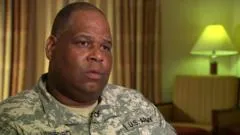
Why does the Fort Hood survivor support a firing squad execution?
Alonzo Lunsford believes that a firing squad is the most appropriate method for the execution of Nidal Hasan because other methods, such as lethal injection or the gas chamber, would be "doing him a favour." Lunsford, a former US Army sergeant who was shot seven times during the 2009 attack, expressed a lack of sympathy for the perpetrator regarding the specific mode of death.
According to Lunsford, the nature of the crime committed by Hasan—who was then a US Army psychiatrist—demands a more severe form of capital punishment. He argued that Hasan showed no compassion for his victims on 5 November 2009, and therefore does not deserve the perceived ease of modern execution methods. Lunsford noted that as a Christian, he has forgiven Hasan personally to facilitate his own healing, but he believes Hasan should use his final moments to seek forgiveness as well. "We're taught that with your last breath you can ask for forgiveness and I think that's what he [Hasan] should do," Lunsford added.
Lunsford's stance is rooted in the perceived lack of empathy shown by the gunman during the attack. He explained that he does not have sympathy for Hasan regarding the choice between a firing squad and other methods like hanging or lethal injection, because Hasan "didn't have that same compassion when he did the deed on 5 November."
The personal impact of the 2009 attack
Lunsford provided a harrowing account of the day the shooting occurred at the Fort Hood medical building in Texas. He described how Hasan, acting in what Lunsford called a "coward's way," jumped onto a counter and began discharging a weapon. Lunsford emphasized that the attack was particularly devastating because personnel in medical facilities do not carry weapons, leaving them vulnerable to such an assault.
The physical and psychological trauma Lunsford endured is significant. He described how he was looking for an exit via a back door that was only "two or three strides" away when he was first shot above his left eye. As he attempted to crawl behind a desk for cover, he was hit two more times in his back. He recounted playing dead in an attempt to survive. He later grabbed a nearby wounded soldier to attempt to move outside, only to be shot again by Hasan, who had come up behind them.
Beyond his own injuries, Lunsford remains haunted by the experiences of others. He recalled a specific, distressing memory of a woman who told Hasan she was pregnant; the last thing she was heard saying was, "Oh my god, my baby, my baby," before a gunshot rang out. Lunsford also addressed Hasan's motivations, stating that while the gunman claimed to be fighting for a cause, Lunsford's reading of the Quran suggested that Hasan's actions were not supported by the text.
What are the concerns regarding the livestreaming of the execution?
While Lunsford supports the execution itself, he expressed strong reservations about the Pentagon's plan to livestream the proceedings to the general public. He told BBC Radio 4's Today programme that the broadcast should not be viewed for "entertainment purposes." His concern centers on the "effect" and the "message" such a broadcast might send to younger generations, fearing it could be treated as a spectacle rather than a solemn legal proceeding.
Lunsford told the BBC, "To show the whole thing without it being censored for the general public, for me personally, I don't agree with that, but it's not about my personal belief." He distinguished between the rights of the victims' families and the rights of the general public. He stated that while he personally disagrees with an uncensored broadcast, he believes that survivors and the families of the deceased "should be able to look at it."
Lunsford even expressed a desire to witness the execution in person, not as a spectator of a broadcast, but to confront the perpetrator. He stated, "I'm gonna be there [to watch in person] and before they pull the trigger, I want him to look at me in my eyes and I look at him in his eyes and I want him to know: 'Dude you failed, I'm still here.'"
How has the Pentagon justified the decision to broadcast the event?
US Defence Secretary Pete Hegseth has defended the decision to allow the public to view a livestream of the execution. The Pentagon's stance is that transparency is necessary to show the direct and severe consequences of committing such crimes. By making the execution visible, the administration aims to ensure the public understands the gravity of the punishment for such acts of violence.
If the execution proceeds as planned, it would represent the first public execution in the United States in almost a century. It would also mark the first military execution in more than 60 years. The administration views the visibility of the punishment as a tool for public accountability, though this approach has met with intense political resistance from various sectors of the government, with critics arguing that such a move is uncharacteristic of American justice.
What is the political and legal reaction to the execution plan?
The announcement of the execution has triggered a sharp divide among US political leaders. Republican Senator Thom Tillis criticized the move on social media, stating that public executions are a characteristic of "oppressive dictators" and should not be happening in America. Democratic Senator Chris Murphy also voiced strong opposition, telling CNN that the prospect of the execution and its broadcast was "disgusting."
Beyond the political rhetoric, the legality of the livestreaming remains highly uncertain. Legal experts have informed the BBC that several significant hurdles exist that could lead to successful court challenges. These challenges may focus on the ethics of broadcasting a death and whether such an act violates existing legal standards or constitutional protections regarding the nature of state-sanctioned punishment.
Potential legal challenges to the livestream
The primary legal tension lies in the intersection of military law, public transparency, and the prohibition of state-sponsored spectacle. Experts suggest that courts may view the livestreaming of a killing as a violation of human dignity or as a form of cruel and unusual punishment. While the Pentagon argues for the necessity of showing consequences, the legal framework governing executions in the US is complex and has historically avoided public broadcasting of the actual moment of death.
The outcome of these potential challenges remains unsettled. If the courts intervene, the Pentagon's plan for a transparent, livestreamed execution could be halted, potentially leaving the method of execution as the only remaining point of contention. However, if the plan proceeds, it will set a major precedent for how the military handles capital punishment and public visibility in the modern era.
Frequently asked questions
Who is Nidal Hasan?
Nidal Hasan was a US Army psychiatrist who carried out a mass shooting at the Fort Hood base in Texas in 2009. He fatally shot 13 unarmed US soldiers in a medical building, an act that remains one of the most significant attacks on US military personnel in recent history.
What method will be used for the execution?
The Pentagon has announced that Nidal Hasan will be executed by firing squad. This method is being chosen because survivors like Alonzo Lunsford have stated that more modern methods like lethal injection would be too lenient given the nature of his crimes.
Will the execution be visible to the public?
Defence Secretary Pete Hegseth has stated that the Pentagon intends to provide a livestream of the execution. The goal is to demonstrate the consequences of such crimes to the public, though this plan faces significant legal and political opposition.
Is this a common practice in the US military?
No, this will be the first military execution in more than 60 years. Furthermore, if the livestreaming proceeds, it would be the first public execution in the United States in almost a century, making it a highly unusual event.
Has the survivor expressed forgiveness?
Yes, Alonzo Lunsford stated that as a Christian, he has forgiven Hasan. He explained that he cannot heal without forgiving the person responsible for his injuries, though he still supports the severity of the military's chosen method of execution.
Key takeaways
- Alonzo Lunsford supports the firing squad method for Nidal Hasan's execution, viewing other methods as too lenient.
- The Pentagon plans to livestream the execution to show the consequences of crime.
- Legal experts warn that the livestreaming plan may face successful court challenges.
- The execution would be the first military execution in over 60 years and potentially the first public execution in the US in nearly a century.
- Political leaders are sharply divided, with some calling the plan "disgusting" and others comparing it to the actions of "oppressive dictators."
Conclusion
The planned execution of Nidal Hasan represents a significant moment in US military and legal history. While survivors like Alonzo Lunsford find the firing squad method appropriate for the gravity of the 2009 Fort Hood massacre, the decision to livestream the event has ignited a fierce debate. The clash between the Pentagon's desire for transparent deterrence and the concerns of legal experts and politicians regarding the ethics of public spectacle remains unresolved. As the legal challenges mount, the outcome will determine whether this becomes a landmark moment for military accountability or a contested precedent for American justice.




