
What happened during the Flydubai flight emergency?
The emergency began approximately two and a half hours into the flight from Dubai International Airport to Tel Aviv when the aircraft experienced a sudden and violent descent. According to passenger Almog Itali, the plane behaved like a "rollercoaster," dropping with massive G-forces for periods of 20 to 30 seconds before attempting to stabilize, only to fall again. The aircraft reportedly plunged some 17,000ft (5,200m) during this period of instability.
Flight telemetry and communication signals indicated the extreme severity of the situation. The aircraft initially broadcast a "general emergency" code (squawk 7700) before switching to squawk 7500. In aviation, the 7500 code is specifically used to report unlawful interference, such as a hijacking. This shift in signaling alerted air traffic control that the flight was under duress and that the cockpit had been compromised by an internal threat.
The descent and cockpit breach
The sudden loss of altitude was a direct result of a violent struggle within the cockpit. As the aircraft plunged, passengers became aware of a commotion originating from the flight deck. The situation escalated when Captain Smit Machchhar, despite being injured, managed to open the cockpit door from the inside to allow assistance to reach him. Machchhar explained that while lying on the floor injured, he realized the plane was sinking and told himself to "go for one last push to open the door from inside," an action that proved critical.
This breach enabled passengers to enter the space and confront the assailant, who was using a crash axe—an emergency tool typically kept in the cockpit—to attack the pilot. Once inside, passengers found the attacker attempting to destroy the flight instruments in an effort to disable the plane's ability to fly. The struggle was not merely a physical confrontation but a race to maintain control of the aircraft's mechanical systems while the plane was in a state of rapid descent.
Who was involved in the Flydubai co-pilot attack?
The primary assailant has been identified by various media outlets, including Reuters, CNN, and The New York Times, as Hamam al-Hammami, an Omani national. Israeli Prime Minister Benjamin Netanyahu stated that the attacker had undergone "Islamist radical indoctrination" and appeared to be acting in a suicidal manner. Netanyahu reported that after the attacker was subdued, he called out to the crew, "Kill me, kill me!" leading the Prime Minister to conclude that the individual likely intended to down the plane.
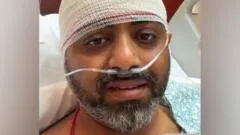
The victim of the physical assault was Captain Smit Machchhar, an Indian national serving as the pilot. Machchhar was stabbed during the attack and was initially treated at a nearby hospital before being airlifted to Abu Dhabi. The Indian embassy in the UAE confirmed on Thursday that the captain is in good health and is recovering well. Machchhar expressed personal confidence in his recovery, stating, "I am confident that the recovery will be there and I will become fit and healthy again."
The successful intervention was a collective effort involving several passengers and crew members. According to Israeli President Isaac Herzog, the alarm was first raised by an Israeli woman, Tali Manes, who heard the commotion from the cockpit. Following the breach, Zvika Manes, Yaniv Hayun, Dr Shota Musayev, and Asaf Rajuan entered the cockpit to assist. Yaniv Hayun described the process of subduing the attacker, noting that the assailant was attempting to destroy flight instruments to disable the plane. Hayun managed to put the attacker in a chokehold and pull him outside the cockpit, where other passengers helped pin him down.
What is the background of the alleged attacker?
Investigations into the background of Hamam al-Hammami suggest a history of professional and ideological concerns. While previously employed at Oman Air, US media reported that al-Hammami had been removed from flight training due to concerns over radical views, which resulted in him being given a different role at Oman's national airline.
Educational records indicate that al-Hammami completed a three-year distance-learning program at Buckinghamshire New University in the United Kingdom. He graduated in 2023 with a degree in aviation management. However, reports from ABC News clarify a distinction in his training: while he completed the management course, a source told the outlet that al-Hammami did not take any pilot training at that specific school.
How was the aircraft eventually landed safely?
The stabilization of the flight was achieved through the rapid intervention of both passengers and reserve crew. After Yaniv Hayun managed to pull the attacker out of the cockpit and place him in a chokehold, he also worked to pull the aircraft's controls to level the plane. Hayun noted that once he pulled the controls, the plane started to level out, at which point another pilot informed him he was taking control.
Once the immediate threat was neutralized and the cockpit was secured, two reserve pilots took over the flight operations. They successfully navigated the aircraft to a safe landing in Saudi Arabia. Israeli Prime Minister Benjamin Netanyahu emphasized the gravity of the intervention, stating that the pilot, passengers, and second crew members had "managed to prevent a 9/11 disaster."
What are the current investigations into the incident?
The United Arab Emirates has launched a formal investigation to determine the exact motives behind the attack. The UAE attorney general informed state media that inquiries are ongoing to establish the full circumstances of the event. A central focus of this probe is whether the incident was linked to any specific terrorist activity or broader political purpose.
The investigation is expected to scrutinize several key areas:
- The radicalization process of the co-pilot and how it went undetected by airline security.
- The potential for organized terrorist involvement in the hijacking attempt.
- The efficacy of cockpit security protocols and the use of emergency equipment, such as the crash axe, in such scenarios.
- The precise sequence of events that led to the 17,000ft descent.
FAQ: Flydubai co-pilot attack
Was the plane destroyed during the attack?
No, the aircraft was not destroyed. Although the attacker attempted to destroy the flight instruments to disable the plane, passengers and reserve pilots managed to regain control. The plane was eventually landed safely in Saudi Arabia after a period of rapid descent and turbulence.
What is the medical condition of Captain Smit Machchhar?
Captain Smit Machchhar is in stable condition and recovering well. After being stabbed during the attack, he was airlifted to Abu Dhabi for medical treatment. The Indian embassy has confirmed that he is in good health and making a steady recovery.
Who was the attacker in the Flydubai incident?
The attacker has been identified by multiple news organizations as Hamam al-Hammami, an Omani national. According to Prime Minister Benjamin Netanyahu, the individual had undergone Islamist radical indoctrination and appeared to be acting in a suicidal manner during the hijacking attempt.
How did the passengers stop the hijacking?
Passengers, including Zvika Manes and Yaniv Hayun, entered the cockpit after the captain opened the door. They subdued the attacker using physical force, including a chokehold, and pulled him out of the cockpit. This allowed the crew and passengers to stabilize the flight controls.
Was this considered a terrorist attack?
The UAE authorities are currently investigating whether the incident was linked to terrorist activity. While the Prime Minister of Israel suggested the attacker had undergone radical indoctrination, the official determination regarding a terrorist motive is still being processed by UAE investigators.
Key takeaways
- The Flydubai co-pilot attacked the captain with a crash axe during a flight to Tel Aviv.
- Passengers and reserve pilots successfully subdued the attacker and landed the plane in Saudi Arabia.
- Captain Smit Machchhar is in stable condition and recovering following a stabbing injury.
- UAE authorities are investigating potential links to terrorist activity and radicalization.
Conclusion
The attempted hijacking of the Flydubai flight represents a significant aviation security crisis that was narrowly averted through the bravery of passengers and crew. The transition from a routine flight to a 17,000ft emergency descent underscores the volatility of cockpit breaches. As the UAE continues its investigation into Hamam al-Hammami’s motives and his potential radicalization, the incident raises critical questions regarding pilot vetting processes and the management of ideological risks within the aviation industry. The successful landing in Saudi Arabia remains a testament to the rapid response of those onboard.