
What triggered the Flydubai co-pilot investigation?
The investigation was launched following a violent attempt by a co-pilot to seize control of a Flydubai aircraft during a flight from Dubai to Tel Aviv on September 30. According to the United Arab Emirates prosecutor general, the incident involved a sudden and dangerous descent of the aircraft. Approximately 2.5 hours into the journey, which was carrying more than 170 passengers, the plane plunged 17,000ft (5,200m) after an assault in the cockpit.
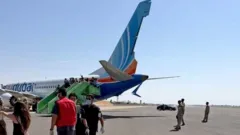
The perpetrator, identified by various media outlets including Reuters and CNN as Hamam al-Hammami, reportedly used a crash axe to attack the captain. The sudden loss of altitude and the chaos in the cockpit necessitated an emergency response from both the crew and the passengers. The aircraft eventually managed an emergency landing in Saudi Arabia, where the co-pilot was taken into custody by local authorities.
The mechanics of the cockpit attack
The attack was characterized by a sudden transition from normal flight operations to a life-threatening emergency. Captain Smit Machchhar, an Indian national and the pilot in command, described the harrowing experience of being injured and incapacitated on the cockpit floor. As the plane lost significant altitude, Machchhar noted that he had to find the strength to attempt to reopen the door from the inside to allow assistance.
The intervention of the passengers proved critical to the survival of those on board. By overpowering the co-pilot, the passengers helped regain control of the immediate environment, allowing two reserve pilots to take over the flight controls. This collective action enabled the crew to navigate the aircraft to a safe landing in Saudi Arabia, preventing a potential catastrophe over populated or sensitive areas.
Why are Australian authorities involved in the probe?
The Australian Federal Police (AFP) have confirmed they are investigating the suspect's specific links to Australia. While the incident occurred in the airspace between Dubai and Israel, the suspect's personal history has drawn the attention of Australian state police and national security agencies. The AFP stated that an update regarding these findings would be provided when appropriate.
Information regarding Al-Hammami's time in Australia suggests a period of residency during his formative years. According to the Australian Broadcasting Corporation (ABC), the suspect was issued a student visa in 2014 and resided in the country for studies between 2015 and 2017. His visa was subsequently cancelled in 2019 by authorities after he was no longer enrolled in an active course, rendering him ineligible to remain.
The involvement of Australian counter-terrorism officials is a primary focus of the domestic aspect of the investigation. Authorities are specifically looking into whether the suspect underwent a process of radicalisation while living in Australia. This aspect of the inquiry aims to determine if there are wider security implications or domestic networks that contributed to the suspect's actions.
What is the suspect's known professional and educational background?
Hamam al-Hammami's career and education reveal a complex history involving aviation and international studies. While the suspect is an Omani national, his professional trajectory has spanned several institutions and airlines. Investigations into his employment history have surfaced details regarding his previous conduct in the aviation industry.
Reports from US media indicate that during his tenure at Oman Air, Al-Hammami was removed from flight training due to concerns regarding his radical views. Following this incident, he was reportedly reassigned to a different role within the national carrier. This history of ideological concerns provides a significant lead for investigators attempting to establish a motive for the Flydubai incident.
Educational history and recent qualifications
In addition to his professional background, Al-Hammami's academic history has been scrutinized by investigators. Since 2020, he was enrolled in a distance-learning programme through Buckinghamshire New University in the United Kingdom. According to the university, he successfully graduated in 2023 with a degree in aviation management.
The university has clarified that while he achieved this degree, he did not receive any specific pilot training through their institution. This academic qualification suggests a level of formal training in the management side of the aviation industry, which contrasts with the violent breach of protocol demonstrated during the flight. Investigators are likely examining whether his studies or professional transitions played any role in his eventual actions.
What is the current status of the legal and medical proceedings?
The legal investigation is currently being conducted across multiple jurisdictions, including the UAE, Saudi Arabia, and Australia. The UAE's attorney general, Hamad Saif Al Shamsi, stated that the investigation is focused on establishing the exact circumstances and motives behind what the country's state news agency described as a "terrorist act." This classification underscores the severity with which the UAE is treating the incident.
In Saudi Arabia, the co-pilot remains in custody and is being questioned by local authorities. The focus remains on determining whether the attack was a premeditated act of terrorism or driven by other specific motives. The international coordination between these nations is essential to building a comprehensive profile of the suspect's intent and potential accomplices.
Regarding the medical status of those involved, Captain Smit Machchhar is reported to be in stable condition. Following the attack, he was treated at a local hospital before being airlifted to Abu Dhabi for further care. His ability to recover is a vital component of the human impact of this incident, as he was the primary target of the assault.
Key takeaways
- The Flydubai flight from Dubai to Tel Aviv experienced a 17,000ft descent following a cockpit attack.
- Co-pilot Hamam al-Hammami allegedly attacked the captain using a crash axe during the flight.
- Australian authorities are investigating the suspect's links to Australia and potential radicalisation.
- The suspect previously worked for Oman Air and was removed from training due to radical views.
- The aircraft landed safely in Saudi Arabia after passengers and reserve pilots intervened.
FAQ: Flydubai co-pilot investigation
Who is the co-pilot involved in the Flydubai incident?
The co-pilot has been identified by several media outlets, including Reuters and CNN, as Hamam al-Hammami. He is an Omani national who was arrested in Saudi Arabia following the emergency landing of the Flydubai aircraft that was traveling from Dubai to Tel Aviv.
What happened during the flight?
During the flight, which was carrying over 170 passengers, the co-pilot allegedly attacked the captain with a crash axe. This resulted in the plane losing 17,000ft of altitude. Passengers eventually overpowered the co-pilot, allowing reserve pilots to land the plane safely in Saudi Arabia.
Is Australia investigating this case?
Yes, the Australian Federal Police (AFP) are investigating the suspect's connections to Australia. They are working alongside state police and national security agencies to determine if the suspect was radicalised during his time as a student in Australia between 2015 and 2017.
What was the captain's condition after the attack?
Captain Smit Machchhar, the pilot in command, was injured during the attack and was initially lying on the cockpit floor. After being treated at a nearby hospital, he was airlifted to Abu Dhabi, where he is currently reported to be in stable condition.
What are the findings regarding the suspect's background?
Investigations show that Al-Hammami was previously removed from flight training at Oman Air due to concerns over his radical views. Additionally, he graduated with an aviation management degree from Buckinghamshire New University in 2023 through a distance-learning programme.
Conclusion
The investigation into the Flydubai cockpit attack has evolved into a complex international security matter. What began as a violent mid-air assault has triggered deep inquiries into the suspect's radicalisation, professional history, and international ties. As Australian, UAE, and Saudi authorities coordinate their efforts, the focus remains on understanding the motives of Hamam al-Hammami and determining if his previous activities in Australia or elsewhere signal broader security risks. The successful landing of the aircraft, facilitated by the bravery of passengers and the resilience of Captain Machchhar, prevented a mass-casualty event, but the underlying causes of the attack remain under intense scrutiny.