
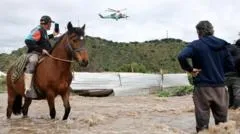
Emergency aerial rescues in Talagante
Police utilized helicopters to perform urgent airlifts in the city of Talagante following a sudden rise in river levels. The Mapocho river burst its banks, inundating large sections of the community located approximately 35km southwest of Santiago. Residents living along the riverbanks were caught off guard by the rapid increase in water levels during the night, leaving many trapped in their homes.
The flooding transformed local dirt roads into rushing rivers, making ground evacuation impossible. Unlike previous storm events in July, the riverside community in Talagante had not been evacuated prior to the heavy downpours. Rescue teams worked to extract both human residents and domestic pets from the rising waters to ensure their safety.
Record-breaking rainfall and meteorological shifts
Santiago has experienced its rainiest October in 76 years due to extreme precipitation levels this month. According to meteorologists, the capital has recorded 74mm of rainfall within the first seven days of October. This surge in moisture is linked to broader climatic shifts affecting the southern hemisphere.
Meteorologists have issued warnings that the current El Niño climate phenomenon is driving these intense weather patterns. The phenomenon is expected to continue bringing powerful winds, storms, and unusually wet conditions to the region throughout the spring season. This unpredictability poses a significant challenge for local disaster management and infrastructure stability.
Impact of El Niño on global weather patterns
Climate experts indicate that the 2026-2027 El Niño cycle is poised to cause significant shifts in global weather systems. While some regions face intensified droughts, others, like central Chile, are experiencing devastating floods. This divergence in weather extremes is a hallmark of the current climate cycle.
The intensification of these patterns suggests that the current flooding in central Chile may not be an isolated event. As El Niño influences atmospheric circulation, the frequency of extreme weather events is expected to rise. Authorities are monitoring these developments closely to prepare for potential future surges in rainfall and wind speeds.
Casualties reported in San Bernardo
Authorities have confirmed one fatality resulting from the recent heavy rains in the region. One person was discovered dead in a flooded underpass located in the city of San Bernardo, which lies south of Santiago. While the presence of a casualty is confirmed, officials have not yet established the specific cause of death.
The incident in San Bernardo highlights the dangers posed by urban flooding, particularly in low-lying transit areas. As water levels continue to fluctuate, emergency services remain on high alert to manage both the immediate rescue needs and the investigation into recent deaths caused by the weather.
FAQ
What caused the flooding in Talagante?
The flooding in Talagante was caused by the Mapocho river bursting its banks following torrential rainfall. The sudden rise in water levels occurred overnight, catching residents by surprise and turning local dirt roads into impassable rivers, which necessitated helicopter rescues by the police.
How much rain has Santiago received this October?
Santiago has recorded 74mm of rainfall during the first seven days of October. This significant amount of precipitation has made this the rainiest October recorded in the area for 76 years, according to local meteorological reports and climate data.
How does El Niño affect the weather in Chile?
The El Niño phenomenon is currently driving unusually wet weather, powerful winds, and intense storms across the region. Experts suggest that the 2026-2027 cycle will continue to influence weather patterns through the spring, potentially causing more extreme flooding in certain areas.
Conclusion
The severe flooding in central Chile underscores the growing volatility of weather patterns driven by the 2026-2027 El Niño phenomenon. From the emergency aerial rescues in Talagante to the tragic fatality in San Bernardo, the human and infrastructural costs are significant. As Santiago faces its rainiest October in over seven decades, the focus shifts toward long-term climate resilience. With meteorologists predicting continued instability throughout the spring, the region must prepare for a period of heightened environmental risk as global weather patterns undergo major shifts.




