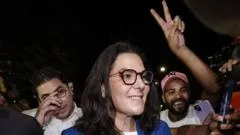
Who is Fatima Zahra El Mansouri?
Fatima Zahra El Mansouri is a prominent Moroccan politician and lawyer who has risen through the ranks of the Authenticity and Modernity Party (Pam) to become the country's first female head of government. At 50 years old, her appointment represents a historic shift in the political landscape of Morocco and the broader Arab region, where she becomes only the second woman to lead a government, following Tunisia's Najla Bouden.
El Mansouri's professional background is rooted in law and urban governance. A graduate of Mohammed V University in Rabat, she furthered her legal expertise with studies in both France and the United States, specializing in corporate and business law. This academic foundation has underpinned a political career that began shortly after the establishment of Pam in 2008.
Her administrative experience is extensive, particularly at the municipal level. She made history as the first female mayor of Marrakesh, a position she held starting in 2009 and regained following the 2021 elections. Beyond local governance, she has served within the national executive branch, holding the portfolio for national territory planning, urban planning, housing, and city policy under the previous administration led by Aziz Akhannouch. In February 2024, her influence within her party was solidified when she was named the coordinator of Pam's leadership coalition.
A career defined by activism over labels
Despite being frequently characterized by observers as an "iron woman," El Mansouri has actively resisted such reductive labels. In a 2021 interview with Pam's official magazine, she clarified her identity, stating that she views herself neither as a woman of steel nor iron, but rather as a "free activist." This distinction suggests a political identity focused on agency and movement rather than static toughness.
How does the Moroccan political system function?
The Moroccan political system operates as a constitutional monarchy where, although parliamentary structures exist, significant executive authority remains concentrated in the hands of the King. Under the nation's constitution, the King holds the prerogative to appoint the head of government, specifically selecting an individual from the political party that achieves the highest number of seats in the elections for the House of Representatives.
While the appointment of a prime minister has traditionally been viewed as a largely formal process, the recent election has introduced a layer of complexity. In previous cycles, most Moroccan parties were led by a single secretary general, which typically streamlined the nomination process. However, Pam has operated under a collective leadership model since February 2024, rather than through a single secretary general. This structural difference may have contributed to the nuance of the King's decision in choosing El Mansouri over Fouzi Lekjaa, a top politician within the same party and the head of Moroccan football.
The intersection of religious tradition and political leadership also remains a key aspect of the Moroccan governance model. During her victory press conference, El Mansouri was questioned regarding potential adjustments to religious ceremonies attended by the King, such as Friday and Eid prayers, where gender segregation is observed. While she did not provide a direct answer to the logistical question, she emphasized her respect for the monarchy, describing King Mohammed VI as "the biggest advocate for women" in the country and the "holder of wisdom."
What are the challenges facing the new government?
The primary challenge for Fatima Zahra El Mansouri lies in the necessity of forming a stable governing coalition to achieve a working majority. Although Pam won the most seats with 97, this figure falls significantly short of the 198 seats required to secure an absolute majority in the 395-member House of Representatives.
The landscape for negotiations is complicated by fractured political relationships and shifting party dynamics. The following table outlines the recent electoral results and the current political standing of the key parties involved:
| Political Party | Seats Won | Political Position/Status |
|---|---|---|
| Authenticity and Modernity Party (Pam) | 97 | Leading party; needs coalition partners |
| Justice and Development Party (PJD) | 54 | Rebounded from 13 seats; remains in opposition |
| National Rally of Independents (RNI) | N/A | Outgoing government leader; friction with Pam |
Forming this coalition will require delicate diplomacy. Pam's relationship with the National Rally of Independents (RNI), which led the previous government, has deteriorated, making them unlikely partners. Furthermore, the Islamist Justice and Development Party (PJD) has seen a significant resurgence, jumping from 13 seats in the previous election to 54. This rebound was driven by the return of former prime minister Abdelilah Benkirane, who has explicitly stated that the PJD will remain in opposition and will not enter into a partnership with Pam.
The difficulty of parliamentary arithmetic
With the two largest blocs—Pam and the PJD—refusing to work together, El Mansouri must look toward smaller parties or unexpected alliances to reach the 198-seat threshold. The inability to secure a majority could lead to legislative gridlock, potentially impacting the government's ability to implement its policy agenda regarding urban planning, housing, and economic reform.
What is the impact on women's rights in Morocco?
El Mansouri's appointment brings renewed attention to the status of women in Moroccan society, even if her own political approach has been cautious regarding gender-specific advocacy. While she is a landmark figure for female leadership, her career has not been defined by vocal campaigning on gender inequality or specific legislative reforms for women.
Morocco continues to host intense debates regarding several sensitive social and legal issues. These include the potential banning of polygamy and the ongoing struggle for equal inheritance rights between men and women. El Mansouri's leadership will be closely watched to see if her presence in the prime minister's office translates into substantive policy shifts on these fronts, or if her administration will maintain the current trajectory of gradualist reform under the monarchy.
Frequently asked questions
Who is the first female Prime Minister of Morocco?
Fatima Zahra El Mansouri is the first woman to hold the position of Prime Minister in Morocco. A lawyer by training and a prominent member of the centrist Authenticity and Modernity Party (Pam), she was appointed by King Mohammed VI following her party's success in the parliamentary elections.
How many seats does Pam need for a majority?
The Authenticity and Modernity Party (Pam) won 97 seats in the recent election. To achieve an absolute majority in Morocco's 395-member House of Representatives, the party must secure a total of 198 seats through coalition agreements with other political parties.
What is the role of the King in appointing the Prime Minister?
Under the Moroccan constitution, the King has the authority to appoint the head of government. He must select the nominee from the political party that wins the most seats in the elections for the House of Representatives, a process that combines constitutional mandate with royal prerogative.
Why is the PJD staying in opposition?
The Justice and Development Party (PJD) has decided to remain in the opposition following its electoral rebound to 54 seats. The party's leader, Abdelilah Benkirane, has explicitly refused to enter into a governing partnership with the Authenticity and Modernity Party (Pam).
Has El Mansouri focused on women's rights in her career?
While El Mansouri is a historic figure for women in Moroccan politics, she has rarely spoken publicly about gender inequality or women's rights. Her political identity is characterized more by her work in urban planning and her role as an activist rather than as a gender-rights advocate.
Key takeaways
- Fatima Zahra El Mansouri becomes Morocco's first female Prime Minister.
- Her party, Pam, won 97 seats but requires 198 for a majority.
- The King appoints the Prime Minister from the leading election winner.
- The PJD party has rebounded to 54 seats and remains in opposition.
Conclusion
The appointment of Fatima Zahra El Mansouri marks a transformative moment in Moroccan political history, breaking a long-standing gender barrier in the Arab world. However, her path to effective governance is fraught with significant structural and political hurdles. To lead successfully, she must navigate a complex parliamentary landscape where her party lacks a majority and faces opposition from a resurgent Islamist bloc. Ultimately, her ability to build a stable coalition will determine whether her historic premiership results in meaningful policy shifts or remains a symbolic milestone within the existing framework of the Moroccan constitutional monarchy.