
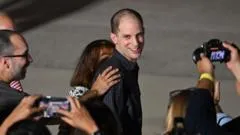
How was Evan Gershkovich lured into the FSB trap?
Evan Gershkovich was arrested in 2023 while attending a meeting in Yekaterinburg, approximately 1,600km east of Moscow, which he believed was with a journalistic source. The arrest was a coordinated operation involving masked men who intercepted him in a dining hall. According to Gershkovich, the group of about half a dozen individuals used a specific, disarming phrase—'I think we booked that table'—to freeze him in place before the detention began.
The involvement of the Federal Security Service (FSB) immediately signaled to the journalist that the encounter was not a random law enforcement action but a premeditated state operation. Gershkovich noted that the presence of the FSB indicated the entire event had been meticulously planned by Russian intelligence. During the encounter, the individual he had been meeting disappeared into the crowd, leaving the correspondent alone to face the security agents.
The tactical precision of the arrest
The use of psychological tactics during the initial confrontation was designed to minimize immediate resistance. By using an odd, seemingly mundane phrase, the agents were able to catch Gershkovich off guard. Gershkovich observed that this method effectively paralyzed him, making the transition from a social meeting to a state arrest instantaneous and difficult to contest.
Why did Gershkovich view himself as a political pawn?
Gershkovich realized he was being treated as a political commodity when he noticed a distinct lack of the interrogation and torture typically applied to suspected spies by Russian security services. This absence of physical abuse led to a paradoxical sense of relief. He concluded that the espionage charges were fabricated specifically to ensure he remained a valuable hostage for future diplomatic negotiations.
By treating him as a 'pawn in a greater game,' the Russian authorities created a high-profile asset that could be leveraged in international relations. Gershkovich anticipated that while the legal process would be lengthy, his status as a prominent foreign correspondent for the Wall Street Journal would eventually make him a candidate for a prisoner exchange. He viewed the entire legal proceeding as a form of state-sponsored theatre designed to create leverage against Western governments.
What was life like inside Lefortovo prison?
During his 16 months of captivity, Gershkovich was held in Moscow's notorious Lefortovo prison, a facility historically used to house political dissidents and high-profile inmates. He described the experience as deeply isolating, characterized by confinement in a tiny space that took a significant psychological toll. However, he noted that his treatment was notably different from the standard experience of many political prisoners in Russia.
Gershkovich stated that he was allowed to sleep and received adequate food, which allowed him to maintain a level of stability and discipline. He also used his public appearances during court hearings to project defiance, smiling for cameras to signal to the world that he was not broken by the state. He emphasized that his experience was an exception to the rule, contrasting his situation with others who face severe deprivation or physical violence.
Comparing experiences of captivity
The journalist highlighted the vast disparity in how Russian authorities treat different detainees. He pointed to the tragic case of Ukrainian journalist Viktoriia Roshchyna, who died in Russian custody in 2024. Unlike Gershkovich, Roshchyna's case involved reported signs of torture and physical mutilation. This distinction underscored his belief that his survival and relative comfort were direct results of his intended utility as a bargaining chip.
How did the prisoner swap facilitate his release?
The high-profile prisoner swap on 1 August 2024 served as the mechanism for Gershkovich's freedom, following months of global diplomatic pressure. The deal involved the exchange of several individuals, including Vadim Krasikov, a Russian assassin who had been serving a life sentence in Germany. The scale of the media coverage, which included billboards in Times Square and public statements from US President Joe Biden, helped sustain the pressure necessary to reach the agreement.
Gershkovich noted that the Russian government appeared to have executed its strategy effectively, as the exchange occurred without the imposition of new sanctions against Moscow. He described the three weeks leading up to the swap as an excruciating period of waiting, where the anticipation made every day feel disproportionately long. The eventual release was a moment of pure joy, though it was quickly followed by the complex challenge of reintegrating into civilian life.
What are the long-term psychological effects of his ordeal?
Following his return to freedom, Gershkovich has struggled with the transition to normalcy, experiencing symptoms consistent with post-traumatic stress disorder (PTSD). He reported difficulty sleeping, panic attacks when navigating large crowds, and emotional volatility. The sudden shift from the high-stakes environment of a political hostage to the mundane requirements of daily life has proven to be an overwhelming adjustment.
To manage these challenges, he has sought professional therapy and has turned to writing as a therapeutic tool. He is currently working on a book regarding his experiences, which serves as both a way to process the trauma and a means of documenting the reality of his imprisonment. His journey highlights the profound, lasting impact that state-sanctioned captivity has on the mental health of even those who manage to survive it.
Frequently asked questions
Who is Evan Gershkovich?
Evan Gershkovich is an American journalist who served as the Moscow foreign correspondent for the Wall Street Journal. He was arrested by Russian authorities in 2023 on espionage charges, which he and his employer have consistently maintained were entirely fabricated for political leverage.
What was the basis of the prisoner swap?
The prisoner swap was a high-level diplomatic agreement that saw the release of Gershkovich in exchange for several Russian interests, most notably Vadim Krasikov. Krasikov is a Russian operative who had been serving a life sentence in Germany following an assassination.
How long was Gershkovich imprisoned?
Gershkovich was imprisoned for 16 months. Although he was initially sentenced to 16 years in prison by a Russian court, his sentence was terminated early through the international prisoner exchange agreement in August 2024.
Where was Gershkovich held during his captivity?
He was held in the Lefortovo prison in Moscow. This facility is well-known for housing high-profile political prisoners and has a long history of being used by the Russian security services to detain individuals considered threats to the state.
What are the symptoms of his PTSD?
Gershkovich has experienced several psychological challenges following his release, including panic attacks in crowded areas, insomnia, and difficulty regulating his emotions. He has sought specialized therapeutic help to manage these post-traumatic symptoms and is using writing to aid his recovery.
Key takeaways
- Evan Gershkovich was arrested by the FSB in Yekaterinburg under fabricated espionage charges.
- He was treated as a high-value political hostage rather than a standard criminal defendant.
- Gershkovich was released after 16 months through a major international prisoner swap.
- The journalist continues to manage PTSD symptoms, including panic attacks and insomnia.
Conclusion
The experience of Evan Gershkovich serves as a stark illustration of how journalism can be weaponized by state actors for geopolitical maneuvering. By treating a foreign correspondent as a commodity, the Russian state utilized his imprisonment to create leverage for prisoner exchanges. While Gershkovich successfully navigated the psychological rigors of Lefortovo prison and secured his freedom, the ordeal has left lasting scars. His transition back to civilian life remains a complex process of recovery, highlighting the profound human cost behind high-stakes international diplomacy.