
How has the recent fighting in Alamata impacted civilians?
The escalation of Ethiopia fighting around the town of Alamata has resulted in significant civilian casualties and a growing humanitarian emergency. According to a medical professional at Alamata General Hospital, the combat between Saturday and Monday involved heavy artillery and explosives that struck residential areas. At least 52 people have died, including vulnerable individuals such as mothers, cattle herders, and children as young as three days old.
The intensity of the strikes is evidenced by a single explosion in the town's marketplace, which reportedly killed twelve people. Beyond the immediate loss of life, the medical burden on the region is substantial. Médecins Sans Frontières (MSF) reported that more than 700 wounded individuals have been admitted to hospitals under its support in the Tigray region as the violence persists.
The humanitarian crisis in Alamata
The town of Alamata has become a focal point for displaced persons, causing a rapid deterioration of local living conditions. As residents from surrounding areas flee the combat zones, many have arrived in Alamata on foot, seeking refuge in what they hoped would be a safe haven. However, the influx of people has coincided with a total breakdown of essential services.
Local sources describe a desperate situation where residents are cut off from the modern world. The suspension of banking services, the absence of electricity, and the lack of internet and telephone connectivity have left the population in a state of extreme frustration and vulnerability. Without the ability to access money or communicate with relatives, the displaced population faces a mounting survival crisis.
What is the current military situation in Tigray and Afar?
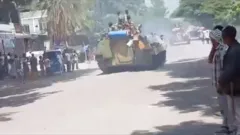
Government troops have reportedly secured Alamata and are preparing to push northward toward Mekelle, the capital of the Tigray region. Social media footage has documented the presence of army tanks on the streets of Alamata, signaling a significant shift in territorial control. This movement follows a period of high tension between the federal government and the Tigray People's Liberation Front (TPLF), the party that governs the region.
The conflict is not confined to Tigray; fighting has also spread into the strategic Afar region. This area is of critical importance because it serves as the primary land link between landlocked Ethiopia and the ports in Djibouti. TPLF fighters are currently engaged in combat in this sector, which could have profound implications for Ethiopia's international trade and logistics.
Conflicting accounts of the outbreak of violence
The responsibility for the resumption of hostilities remains a point of intense dispute between the two main belligerents. The TPLF maintains that its military actions were a defensive response to a federal offensive that included the use of drone strikes. Conversely, the Ethiopian government asserts that Tigrayan forces initiated the conflict by seizing control of regional airports.
How has the conflict affected tourism in Lalibela?
The Ethiopia fighting has spilled over into the neighbouring Amhara region, specifically affecting the UNESCO World Heritage site of Lalibela. For the past week, at least 33 tourists have been stranded in the area due to the closure of the local airport to commercial flights. Lalibela, famous for its 13th-century rock-hewn churches, has seen a heavy military presence as clashes continue between the federal army and an Amhara militia allied with Tigrayan fighters.
While some evacuations have taken place, many international visitors remain stuck. A British tourist reported that 14 Israeli nationals were evacuated via military helicopter on Monday, and five others left through an NGO convoy. However, a significant group of tourists—primarily from the United States, but also including nationals from South Korea, South Africa, Mexico, and the United Kingdom—remain in the area.
Security and movement in the Amhara region
The security situation in Lalibela remains volatile despite reports of a slight calm in recent days. While online banking remains functional in the town, there is a notable shortage of physical cash. Although there are indications that the airport, currently used by military forces, might reopen, the local population remains in a state of fear. Observers have noted large military formations moving north from the town, suggesting continued tactical shifts in the region.
What are the broader political and regional implications?
The current violence threatens to destabilize the entire Horn of Africa, particularly due to the potential involvement of Eritrea. The Ethiopian government has accused Asmara of supporting the armed groups currently fighting the federal state, a claim that the Eritrean government denies. If Eritrea is drawn into the conflict, the scale of the war could expand far beyond the current Tigrayan and Amhara borders.
The fighting is also part of a larger political realignment. In September, various Ethiopian armed movements joined forces to form a seven-member alliance. This coalition has explicitly stated its intention to remove the current government from power in the capital, Addis Ababa. This move suggests that the current clashes are not isolated incidents but part of a broader struggle for national political control.
Digital and financial isolation in Tigray
The conflict has been accompanied by a significant crackdown on communications and financial infrastructure. The government has suspended banking services in Tigray, and internet access has been severed across the region. This blackout has created a secondary crisis for Tigrayans living outside the conflict zone. Many individuals who moved to the capital, Addis Ababa, have reported that their bank accounts have been frozen or restricted, making it impossible to conduct basic transactions.
In an attempt to mitigate the impact of the telecommunications shutdown, the Tigray Broadcasting Service (TBS), based in Addis Ababa, has launched a digital lifeline. The broadcaster is using its Telegram channel to collect video messages from people outside the region, which are then aired via satellite TV. While this provides a limited way for families to exchange greetings and updates, it remains a fragile connection in an increasingly isolated landscape.
Frequently asked questions
How many people have died in the recent Alamata fighting?
At least 52 civilians have been killed during three days of intense combat around Alamata in the Tigray region. Medical sources report that the deaths include mothers, cattle herders, and children as young as three days old, following heavy artillery strikes on residential areas and marketplaces.
Why are tourists stranded in Lalibela?
Tourists are stranded in Lalibela because the local airport was closed to commercial flights following the outbreak of fighting between the federal army and an Amhara militia. While some evacuations have occurred via military helicopter or NGO convoys, many international visitors remain unable to leave the area.
What is the role of the TPLF in the current conflict?
The Tigray People's Liberation Front (TPLF) is the political party that governs the Tigray region. They claim to be responding to federal drone strikes and offensives, while the government accuses them of initiating the conflict by seizing control of regional airports and moving into the Afar region.
How has the internet shutdown affected the population?
The internet and telecommunications shutdown has isolated the Tigray region, preventing residents from communicating with family or accessing digital services. This has exacerbated a humanitarian crisis, as people in the area cannot access banking, money transfers, or essential information during the height of the fighting.
Is there a risk of Eritrea joining the war?
There is significant concern that Eritrea could be drawn into the conflict. The Ethiopian government has accused the administration in Asmara of providing support to the armed groups currently fighting the federal government, although Eritrea has denied these allegations.
Key takeaways
- At least 52 civilians have died in Alamata following three days of heavy artillery and explosive combat.
- Over 700 wounded individuals have been admitted to hospitals in Tigray supported by Médecins Sans Frontières.
- The conflict has stranded dozens of international tourists in Lalibela due to the closure of the regional airport.
- A communications and banking blackout in Tigray has severely hindered humanitarian aid and personal financial stability.
- The formation of a seven-member armed alliance aims to challenge the federal government's control in Addis Ababa.
The shifting landscape of Ethiopian stability
The escalation of fighting in Tigray and the Amhara regions represents a significant breakdown of the 2022 peace agreement. The combination of high civilian casualties, the strategic targeting of trade corridors in Afar, and the potential for regional intervention by Eritrea suggests a period of prolonged instability. As the conflict moves toward Mekelle and involves broader political alliances, the humanitarian cost is likely to rise, compounded by the systematic isolation of the Tigrayan population through digital and financial blockades.