
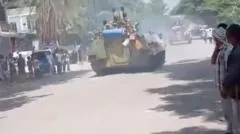
Why have Ethiopia and Eritrea severed diplomatic ties?
Ethiopia and Eritrea have ended formal diplomatic relations following a series of escalatory moves involving embassy closures and diplomat expulsions. On Thursday, the Ethiopian government announced it was shutting its embassy in the Eritrean capital, Asmara, while simultaneously ordering 10 Eritrean diplomats to exit the country within a 48-hour window. The Ethiopian administration justified these actions by accusing the diplomats of participating in activities that jeopardize national security.
Eritrea responded immediately by reciprocating the decision, stating that the Ethiopian move left the nation with no alternative but to sever all diplomatic connections. The Eritrean foreign ministry warned that this rupture would lead to "negative corollaries," suggesting further instability. This diplomatic collapse follows reports of powerful explosions heard near Ethiopia's military headquarters in Addis Ababa, adding a layer of domestic volatility to the international friction.
The collapse of the 2018 rapprochement
The current breakdown represents a significant reversal of the peace process initiated in 2018. At that time, Prime Minister Abiy Ahmed restored relations with Eritrea, ending two decades of hostility and reopening borders that had long separated families. This peace deal was a major milestone in regional politics, earning Abiy the Nobel Peace Prize in 2019. The return to total diplomatic severance signals the failure of that era of cooperation.
The 2018 rapprochement had once promised a new era of stability for the Horn of Africa, characterized by joyous scenes at the border. However, the current hostilities represent the most serious breakdown since the peace agreement that ended the devastating Tigray war in 2022. The rapid shift from Nobel-winning diplomacy to total severance highlights how quickly regional alliances can disintegrate when domestic and territorial interests collide.
What is the current military situation in northern Ethiopia?
Renewed fighting is currently concentrated in the northern regions of Tigray, Afar, and Amhara, involving federal forces and a diverse coalition of armed groups. The conflict involves the Tigray People's Liberation Front (TPLF) and a newly formed alliance of seven armed movements, including the Fano militia from the Amhara region. This alliance has explicitly stated its goal is the removal of Prime Minister Abiy Ahmed's government from power.
Military operations have seen federal forces making advances in southern Tigray, moving toward the regional capital, Mekelle. However, the human cost is mounting; in Alamata, medical professionals have reported that at least 52 civilians were killed during a three-day period of intense combat. Furthermore, fighting has spread into the Afar region, which serves as a vital transport corridor linking Ethiopia to the sea via Djibouti. This expansion of the conflict has reportedly displaced tens of thousands of residents.
The nature of the combat remains highly contested. Both the Ethiopian government and the TPLF accuse the other of initiating the latest hostilities. Tigrayan authorities claim their forces are responding to a federal offensive and drone strikes, while Addis Ababa maintains that Tigrayan fighters launched attacks after seizing control of federally administered airports within the Tigray region.
Allegations of Eritrean military involvement
A central point of contention in the current fighting is the alleged presence of Eritrean troops on the Ethiopian front lines. A pro-government militia commander operating in Tigray told the BBC that Eritrean soldiers have been actively involved in the combat. While Eritrea's Information Minister, Yemane Gebremeskel, has denied these claims—suggesting the Prosperity Party is using external scapegoats to deflect from internal failures—the presence of foreign troops remains a primary driver of the current diplomatic crisis.
The denial from Asmara comes at a critical time, as the BBC has been unable to independently verify these allegations due to being unable to report from Tigray and the widespread cutting of internet communications in the region. It remains unclear who is responsible for the communication blackouts, but the lack of reliable information makes it difficult to ascertain the true extent of foreign military involvement or the scale of the ground fighting.
How does the Red Sea issue influence the tension?
Long-standing disputes over maritime access continue to underpin the friction between Addis Ababa and Asmara. Ethiopia, a landlocked nation since Eritrea gained independence in 1993, has increasingly argued that direct access to the Red Sea is a fundamental requirement for its long-term economic security and national interest. Prime Minister Abiy Ahmed has made this pursuit a central pillar of his administration's strategic outlook.
Eritrea views these ambitions with suspicion, frequently accusing the Ethiopian government of harboring territorial intentions over its ports and coastline. This geopolitical tug-of-war creates a baseline of mistrust that makes diplomatic resolutions difficult, as any move by Ethiopia to secure maritime routes is perceived by Asmara as a threat to its sovereignty and regional standing. The tension over the Red Sea remains a persistent fault line in the relationship between the two neighbors.
What is the impact of the conflict on humanitarian aid?
The escalating violence and the disruption of infrastructure are severely hindering international humanitarian efforts in northern Ethiopia. The United Nations has expressed grave concern regarding the safety of aid operations and the well-being of civilian populations. According to UN spokesman Stéphane Dujarric, the widespread use of drone activity and air strikes poses a direct risk to vital infrastructure and the people receiving assistance.
Insecurity and the closure of major roads have created significant barriers to the movement of supplies. The UN has issued urgent calls to all warring parties to ensure safe, unhindered access for humanitarian organizations to reach those in need. The disruption is not only a matter of physical access but also of safety, as the deteriorating security situation places aid workers and the civilian populations they serve at extreme risk.
Frequently asked questions
Why did Ethiopia expel Eritrean diplomats?
Ethiopia expelled 10 Eritrean diplomats after accusing them of engaging in activities that threaten the country's national security. This decision led to the closure of the Ethiopian embassy in Asmara and prompted Eritrea to sever all diplomatic ties in a reciprocal move.
What is the goal of the new rebel alliance?
The TPLF has joined six other armed movements, such as the Fano militia, to form an alliance. Their stated objective is to remove Prime Minister Abiy Ahmed's government from power through military action across northern regions.
How many people died in the previous Tigray war?
While exact figures are difficult to confirm, an African Union mediator previously estimated that approximately 600,000 people lost their lives during the two-year conflict that ended with a peace agreement in 2022.
Is Eritrea involved in the current fighting?
There are conflicting reports regarding Eritrean involvement. A pro-government militia commander alleged that Eritrean soldiers are fighting on the front lines, but Eritrea's Information Minister has officially denied these claims, calling them diversions.
How is the conflict affecting the Red Sea corridor?
The fighting in the Afar region is threatening Ethiopia's primary transport corridor to Djibouti. This corridor is essential for maritime trade, and the instability in the region risks disrupting vital economic links to the sea.
Key takeaways
- Ethiopia and Eritrea have officially severed all diplomatic relations following mutual accusations.
- A new rebel alliance including the TPLF and Fano militia seeks to unseat the Ethiopian government.
- The conflict has expanded into the Afar region, threatening critical transport routes to the sea.
- The UN warns that drone strikes and road closures are severely disrupting humanitarian aid.
The regional outlook
The collapse of diplomatic relations between Ethiopia and Eritrea marks a dangerous turning point for the Horn of Africa. The transition from the 2018 peace era to the current state of total severance suggests that regional stability is increasingly fragile. With the TPLF-led alliance actively challenging federal authority and Eritrea's role remaining a point of intense dispute, the risk of a broader regional war is high. International bodies like the African Union and the UN continue to call for restraint, yet the combination of maritime ambitions and domestic political survival continues to drive the escalation.