
What is the primary objective of the Cuban-American National Chamber of Commerce?
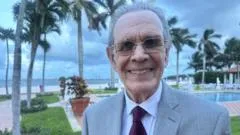
The Cuban-American National Chamber of Commerce (CANCC) seeks to position Miami’s most prominent entrepreneurs to lead Cuba's economic recovery immediately following a regime change. According to CANCC president Juan Omar Sixto, the organization’s fundamental goal is to be present on the island to facilitate business operations once the current government is no longer in power. This initiative represents a concerted effort by the Cuban exile community to prepare for a post-communist landscape.
The CANCC is not merely a social or political lobby; it is functioning as a shadow economic planning body. The group has already moved beyond rhetoric to develop concrete institutional frameworks, including:
- The creation of a proposal for a dedicated Cuban Stock Exchange.
- The formation of specialized committees to address critical infrastructure, specifically energy.
- Strategic planning for national food security to reduce the island's dependence on imports.
For many in the Miami diaspora, these steps are a necessary response to the long-standing economic stagnation in Cuba. By organizing now, the CANCC hopes to provide the capital and organizational structure required to transition from a state-controlled economy to a market-oriented one.
How are economic reforms in Cuba being viewed by the diaspora?
The Cuban-American business community largely dismisses recent economic liberalisation measures introduced by the current administration as superficial and insufficient. While President Miguel Díaz-Canel recently announced 176 measures intended to "advance the defence of socialism" and support social justice, the CANCC views these as cosmetic changes that lack meaningful legal guarantees for private investors.
The recent reforms included several significant shifts, such as:
- Lifting the ceiling on the number of workers permitted in private businesses.
- Allowing for the direct hiring and firing of employees.
- Permitting individuals to own multiple enterprises simultaneously, including by Cuban Americans.
The debate over "Socialism vs. Capitalism"
Although the Cuban government frames these changes as a way to strengthen the socialist model, critics argue they are actually the hallmarks of full-blown capitalism. Despite these concessions, the CANCC maintains a stance of extreme caution. President Sixto has stated that his members would not invest in the island so long as the current regime remains in place, citing a lack of security for private property and investment.
What role does land restitution play in the CANCC's vision?
Land titles and the compensation for expropriated properties form the most contentious pillar of the CANCC’s reconstruction strategy. Many of the organization's members represent families who lost significant assets, including farms and commercial properties, during the 1959 revolution. For these individuals, the transition to a new system is inseparable from the pursuit of "moral justice."
Juan Omar Sixto, for instance, has sought restitution for five properties and a farm in the Pinar del Rio province that were seized from his family. His position is not necessarily to evict current residents, but to secure financial compensation for the lost assets. "I want restitution or compensation. Even if they give me just a penny on the dollar, I'll take it," Sixto has stated.
This push for restitution faces significant opposition and historical complexity:
- Government Perspective: The Cuban administration portrays these claims as the grievances of a corrupt landed gentry and argues that the land reforms were necessary to empower workers.
- Historical Context: The government highlights that the previous land ownership structures were often built on systems of indentured labor and slavery, which did not end in Cuba until the late 19th century.
- Alternative Uses: Organizations like the National Association of Sugar Mill Owners of Cuba, led by Nicolás Gutiérrez, suggest that recovered lands might be repurposed for modern industries such as ethanol, solar energy, or water purification rather than traditional sugar production.
Why do analysts question the timing of these economic plans?
Academic and political analysts suggest that the CANCC’s intensive planning may be premature given the current geopolitical climate. While the Miami-based group anticipates an imminent collapse of the Cuban government, some experts believe the likelihood of a sudden transition is being overestimated.
Mike Bustamante, an associate professor of history at the University of Miami, notes that the high expectations generated by the US administration regarding a "day after" scenario have recently cooled. He points to several factors that suggest the US may not be ready for a major foreign intervention:
- US Political Cycles: The approach of the November mid-term elections creates a cautious environment for significant foreign policy shifts.
- Global Conflicts: The US administration's involvement in other international crises, such as the conflict in Iran, limits the appetite for new "foreign adventures."
- Sanctions Strategy: Bustamante argues that the current US strategy is more likely to remain a "drip-drip-drip of sanctions" rather than an escalation toward military or total regime-change operations.
While the US blockade and the cutoff of the island's oil supply since January have intensified the pressure on the Cuban state, analysts argue these measures have yet to create the specific "ingredients for a political inflection point" required for a total systemic collapse.
What is the disconnect between Miami's plans and Cuba's reality?
There is a profound and dangerous gap between the sophisticated economic roadmaps being drafted in Miami and the humanitarian crisis currently paralyzing the Cuban population. While the CANCC discusses stock exchanges and agricultural technology, the people on the island are struggling to access the most basic necessities of life.
The scale of the required intervention is immense. For example, repairing the failing Cuban electrical grid is estimated to cost between $8 billion and $10 billion. This is a staggering figure for an economy that is currently experiencing frequent, nationwide blackouts and acute shortages of:
- Food and clean water.
- Fuel and electricity.
- Essential medicines.
Furthermore, the CANCC's focus on private investment and land rights creates a tension with the immediate needs of the Cuban people. While experts like Hugo Orizondo argue that foreign investment will bring the necessary technology and capital to make the island self-sufficient, the transition period itself could trigger massive social and humanitarian disruption. For the average Cuban, the high-level discussions of "multiplier economic effects" in Miami offer little comfort against the reality of daily survival.
FAQ: Cuban-American National Chamber of Commerce
What is the CANCC?
The Cuban-American National Chamber of Commerce (CANCC) is a Miami-based organization composed of wealthy Cuban-American entrepreneurs. Its primary purpose is to organize economic planning and investment strategies to be implemented in Cuba following a change in the current government.
What are the CANCC's main economic goals?
The organization is focused on establishing a Cuban Stock Exchange, managing energy infrastructure, and ensuring food security. They aim to provide the capital and technological expertise necessary to transition Cuba from a state-run economy to a private-sector-driven market.
Will the CANCC seek to evict current Cuban residents?
According to CANCC leadership, the focus is on seeking compensation or restitution for expropriated lands rather than the mass removal of current occupants. The goal is to resolve historic title claims through financial settlements or modern industrial repurposing of the land.
How does the Cuban government respond to these plans?
The Cuban government typically views such initiatives with indignation, characterizing the members of the diaspora as a corrupt landed gentry. They argue that the current economic reforms are intended to protect socialism and that the exile community's claims are rooted in historical inequality.
Is a regime change in Cuba imminent?
While the CANCC and some members of the US administration express high expectations for a transition, many analysts believe a sudden shift is unlikely. Current geopolitical tensions and US domestic politics suggest a continued policy of sanctions rather than immediate intervention.
Key takeaways
- The CANCC is drafting post-communist economic plans, including a proposed Cuban Stock Exchange.
- The organization focuses on energy, food security, and land restitution for exiled families.
- Analysts warn that US political commitments and global conflicts may delay any major intervention.
- A massive $8bn to $10bn investment is needed just to repair Cuba's electrical grid.
- A significant gap exists between Miami's investment plans and Cuba's current humanitarian crisis.
Conclusion
The ambitions of the Cuban-American National Chamber of Commerce highlight a powerful, organized effort by the diaspora to reclaim economic influence over their homeland. However, their sophisticated blueprints for a market economy stand in stark contrast to the crumbling infrastructure and humanitarian desperation currently defining life in Cuba. While the CANCC prepares for a future of stock exchanges and technological agricultural shifts, the immediate reality for Cubans remains one of blackouts and scarcity. The success of any post-regime transition will depend not only on the capital provided by Miami but on the ability to manage the immense social disruption that such a monumental shift will inevitably trigger.