
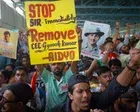
Why is the Cockroach Janta Party leading these protests?
The Cockroach Janta Party (CJP) is driving a movement that demands the immediate resignation of India's chief election commissioner, Gyanesh Kumar. This demand follows a massive nationwide voter list review, termed the "special intensive revision," which has sparked intense allegations of democratic erosion. While the CJP originated as a satirical online movement in May, it has rapidly evolved into a potent political force, particularly among India's Gen Z demographic.
The movement's momentum is fueled by the scale of the electoral changes. The revision process has resulted in the removal of more than 130 million names from voter rolls across various states and federally administered territories. To put this figure in perspective, the number of removed voters exceeds the total populations of countries such as Japan or Mexico. For the CJP and its supporters, these deletions are not merely administrative errors but a targeted attempt to disenfranchise specific segments of the population.
The evolution of a satirical movement
What began as an internet-based phenomenon has transitioned into organized street activism. The CJP has demonstrated an ability to mobilize youth through digital platforms, translating online sentiment into physical demonstrations in major hubs like Bengaluru and Pune. This shift from satire to serious political opposition marks a significant change in the Indian political landscape, as the party successfully leverages social media to coordinate large-scale actions and bypass traditional political structures.
What are the allegations regarding the voter list revisions?
Opposition parties and the CJP allege that the recent voter list revisions disproportionately target voters who support the opposition, while preserving or adding those likely to support Prime Minister Narendra Modi’s party. This perceived bias has turned a technical electoral process into a high-stakes battle over the integrity of the world's largest democracy. Millions of citizens have already filed appeals against the deletions, citing errors and unfair removals.
The government and the election commission have formally rejected these accusations. According to officials, the "special intensive revision" is a legitimate administrative effort designed to clean up electoral rolls by removing duplicate entries and ineligible voters. They maintain that the process is strictly technical and aimed at ensuring the accuracy of the democratic process rather than influencing its outcome.
How have authorities responded to the growing unrest?
Authorities have responded to the mounting tension with significant police action and mass detentions. A spokesperson for the CJP, Ashutosh Ranka, stated on X that at least 10,000 people—including CJP members, student organizations, and grassroots groups—have been detained nationwide. Social media footage has corroborated reports of activists being transported in police vans, with specific reports emerging from Pune regarding students being moved to unknown locations ahead of the planned October 10 protest.
The scale of the crackdown has led to further accusations of heavy-handedness. On Wednesday, the Congress party claimed that police used "brute force" to detain high-profile leaders, including Rahul Gandhi and Priyanka Vadra, as they attempted to reach the Jantar Mantar protest site in New Delhi. However, Delhi Police have dismissed these claims, asserting that the opposition is attempting to "defame" the police force.
Government and BJP perspectives
The ruling Bharatiya Janata Party (BJP) has taken a firm stance against the protesters. BJP spokesperson Gaurav Bhatia characterized the opposition's actions as being led by "an irresponsible, anarchist opposition." During a media briefing, Bhatia insisted that the allegations of misconduct and voter manipulation have "no base" and lack "an iota of evidence." This highlights the deep polarization between the government's narrative of administrative necessity and the opposition's narrative of democratic theft.
What is the impact of these protests on the current administration?
These demonstrations represent a significant political challenge for Prime Minister Narendra Modi, who is currently midway through his third term. The CJP has already demonstrated its capacity to effect change; just months ago, similar protests led by the group resulted in the resignation of the education minister following a series of exam paper leaks. The current wave of protests over voter rights threatens to further destabilize the government's mandate.
The protests are not limited to Delhi. In tech hubs like Bengaluru, hundreds of CJP supporters have taken to the streets, carrying messages such as "Every name counts, Every vote matters" and "Stop the Murder of Democracy." For many young protesters, the issue is existential. Khushi Shrivastava, a 22-year-old architecture student in Bengaluru, expressed the sentiment of many in her generation, stating that the denial of voting rights strikes at the very core of democratic principles.
FAQ: Understanding the India voter protest crisis
What is the main cause of the protests in India?
The protests are primarily driven by a controversial nationwide voter list revision that has removed over 130 million names. The opposition and the Cockroach Janta Party (CJP) allege these removals are politically motivated to disenfranchise opposition supporters, while the government claims it is a routine cleanup of duplicate entries.
Who is the Cockroach Janta Party?
The Cockroach Janta Party (CJP) is a political movement that began as a satirical online campaign in May 2026. It has since evolved into a significant youth-led political force, particularly among Gen Z, known for organizing large-scale street protests and digital activism against the current administration.
How many people have been detained?
According to CJP spokesperson Ashutosh Ranka, at least 10,000 people have been detained across India. These detentions reportedly include members of the CJP, various student organizations, and affiliated grassroots groups, as authorities attempt to prevent large-scale demonstrations in cities like Delhi.
Why is Gyanesh Kumar being targeted?
Protesters are demanding the resignation of Chief Election Commissioner Gyanesh Kumar due to his oversight of the "special intensive revision" of voter lists. The opposition holds him responsible for the controversial removal of millions of voters, which they claim undermines the integrity of the electoral process.
What is the government's stance on the voter list changes?
The Indian government and the election commission reject all allegations of bias. They maintain that the revision is a necessary administrative procedure intended to remove ineligible and duplicate entries from the voter rolls to ensure the accuracy of the upcoming elections.
Key takeaways
- The CJP reports that at least 10,000 protesters and activists have been detained nationwide.
- Over 130 million names have been removed from India's voter lists during recent revisions.
- The Cockroach Janta Party has transitioned from a satirical online movement to a major political force.
- Protesters are demanding the resignation of Chief Election Commissioner Gyanesh Kumar.
- The BJP denies all allegations of voter list manipulation and characterizes the opposition as anarchist.
The future of Indian democratic stability
The escalating tension between the Indian government and the rising Cockroach Janta Party marks a critical juncture for the nation's political stability. As the planned march to Jantar Mantar approaches, the focus remains on whether the administration will address the concerns regarding electoral integrity or continue to rely on security-led responses. The scale of the voter deletions—exceeding the populations of entire nations—ensures that this dispute will remain at the center of Indian politics for the foreseeable future, testing the resilience of its democratic institutions.




