
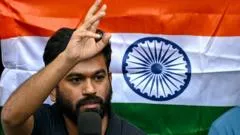
Why was Abhijeet Dipke detained before the protest?
Police detained Abhijeet Dipke hours before the planned march in central Delhi. Officers approached him near his vehicle and placed him in a police van. Supporters attempted to block the vehicle. This marked his second detention within a week. The previous Saturday, officers had removed him from a flight upon arrival in Delhi to stop him reaching another demonstration. He was released the next day after agreeing to conditions of good behaviour.
The Cockroach Janta Party stated that contact with Dipke was lost after the arrest and that he was taken to an undisclosed location without access to legal representation. Police have not issued a public statement on the specific grounds for this latest detention.
How did the protest develop in Connaught Place?
Authorities closed Central Park, the original protest site, for two days. Several hundred demonstrators instead assembled around the perimeter of the closed area in Connaught Place. They carried Indian flags and chanted slogans. Police maintained a heavy presence with thousands of officers and paramilitary units deployed across the district.
For most of the evening, security forces largely observed the crowd. As night fell, officers began detaining some participants and used force against others. The BBC observed at least two injuries and the removal of young demonstrators, including women, onto buses. Around 200 to 300 people took part at the peak, with numbers increasing gradually through the evening.
What are the main demands of the Cockroach Janta Party?
The group calls for the resignation of Chief Election Commissioner Gyanesh Kumar. It alleges that the Special Intensive Revision of voter lists removes eligible voters and favours the ruling Bharatiya Janata Party. The Election Commission maintains that the exercise targets only ineligible, deceased or duplicate entries.
Friday's demonstration also sought the release of two other leaders, Saurav Das and Ashutosh Ranka, who had been jailed for five days after returning to the restricted Jantar Mantar site. The movement insists that repeated detentions will not halt its activities.
How did the Cockroach Janta Party emerge and grow?
The movement started in May 2026 after India's chief justice compared some unemployed young people to cockroaches. Abhijeet Dipke adopted the term and turned it into the name of the Cockroach Janta Party. The group first organised online and then held street actions over leaked examination papers.
A July march toward parliament led to clashes with police and wider public attention. The unrest contributed to the resignation of the education minister. The party later shifted focus to electoral issues and voter list revisions.
What has been the response from authorities and opposition figures?
Police have defended their actions as necessary to preserve public order and prevent unauthorised gatherings. They removed Jantar Mantar from the list of approved protest locations and offered alternative sites. Opposition leaders, including Rahul Gandhi, have criticised the arrests and called for the reopening of traditional protest areas.
Home Minister Amit Shah has accused opposition groups of spreading false information about the voter list revision and has supported the Election Commission's independence.
Frequently asked questions
What is the Cockroach Janta Party?
It is a youth-led movement that began as an online campaign in May 2026 and later organised protests over employment and electoral issues in India.
Why was Central Park closed on 16 October 2026?
Authorities cited administrative reasons for closing the park for two days and offered an alternative location for a small flag-waving event.
Have the detained leaders been released before?
Abhijeet Dipke, Saurav Das and Ashutosh Ranka were released after an earlier detention but Das and Ranka were later sent to jail for five days.
Does the Election Commission accept the allegations?
The Commission states that the voter list revision targets only ineligible entries and denies any partisan motive.
Are opposition parties involved in the same protests?
Opposition figures have held separate demonstrations against the Election Commission while expressing support for the release of Cockroach Janta Party leaders.
Key takeaways
Abhijeet Dipke was detained for the second time in a week on 16 October 2026 ahead of a planned protest in Delhi.
The Cockroach Janta Party accuses the Election Commission of manipulating voter lists through the Special Intensive Revision.
Police deployed thousands of officers and closed Central Park to prevent the gathering in Connaught Place.
Two other leaders remain in jail after attempting to protest at the restricted Jantar Mantar site.
The movement began in May 2026 and gained prominence through actions over exam leaks and now electoral concerns.
Conclusion
The detention of Abhijeet Dipke continues a pattern of repeated arrests of Cockroach Janta Party leaders. The movement has maintained its focus on the Election Commission despite restrictions and police action. Authorities have limited access to traditional protest sites while the group adapts its tactics. The dispute over voter list revisions remains unresolved and continues to draw both youth and opposition attention in the capital.




