
Why were the Cockroach Janta Party leaders released?
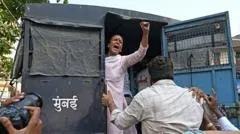
The leaders of the Cockroach Janta Party (CJP) were released by a Delhi court on the condition that they refrain from any breach of peace for a period of one year. This judicial decision follows the detention of Abhijeet Dipke, Saurav Das, and Ashutosh Ranka, who were intercepted by police upon their arrival in the capital on Saturday. The police had initially sought their remand, citing the necessity of maintaining public peace during a period of heightened tension and planned demonstrations.
The legal status of the movement remains complex. While the CJP has gained significant momentum through social media and street demonstrations, it is not officially registered as a political party in India. The court's conditional release has left some ambiguity regarding the group's ability to continue its organized demonstrations, as the specific legal definition of "breach of peace" in this context has not been fully clarified by legal representatives. It remains unclear whether this condition prevents the CJP leaders from participating in future protests.
The detention of movement leaders
The detention process was marked by high-profile, preemptive police intervention. According to reports, police officials boarded the flight carrying Dipke and his colleagues to ensure their immediate custody as soon as their plane landed in Delhi on Saturday. This action was part of a broader strategy to prevent the group from reaching Jantar Mantar, a landmark site in the Indian capital used for political demonstrations, where they had intended to lead a rally seeking electoral reforms.
The police had explicitly refused permission for the protest to take place at Jantar Mantar. This refusal, combined with the arrival of the leaders, triggered an intense security response designed to thwart the protesters from reaching their intended venue. The movement's leaders were held as authorities sought to prevent the gathering from escalating, reflecting the high stakes of the CJP's current campaign.
What is the impact of the protests on Delhi?
Delhi experienced a state of near-lockdown on Saturday as authorities implemented unprecedented security measures to thwart planned demonstrations. The deployment of thousands of police and paramilitary personnel resulted in widespread barricading of roads and the closure of critical transport hubs, creating an atmosphere described by some as a city under siege.
The disruption to public infrastructure was extensive and affected both local residents and travelers. According to media reports, the following measures were implemented:
- Closure of at least 45 metro stations across the city.
- Shutdown of Delhi's main railway stations, leading to the cancellation of major train services.
- Barricading of key thoroughfares, preventing access to landmarks like Jantar Mantar.
- Widespread closure of offices, shops, and restaurants.
- Interruption of travel for those coming from outside the city, with many protesters being de-boarded en route.
While the planned gathering at Jantar Mantar was largely prevented by police intervention—with only a handful of protesters managing to reach the site before being swiftly removed—the crackdown did not stop all forms of dissent. Thousands of individuals, including activists, senior lawyers, and student leaders like Neha Bora, were detained during attempted marches. Although many were released late Saturday night, the scale of the deployment continued through the day, leaving the city in a state of high tension.
How did the Cockroach Janta Party originate?
The Cockroach Janta Party originated from a viral social media interaction involving Abhijeet Dipke following controversial remarks by the Chief Justice of India. The movement's name and identity stem from a joke made by Dipke in response to Chief Justice Surya Kant, who had likened some unemployed young people to "cockroaches." Dipke, a former associate of the Aam Aadmi Party (AAP) who recently completed a master's degree at Boston University, responded on X with the question: "What if all cockroaches come together?"
This post went viral and served as a catalyst for a broader movement tapping into widespread youth frustration. The CJP has successfully channeled public anger regarding several systemic issues, including:
- High rates of unemployment among the youth.
- Frequent leaks of competitive examination papers.
- Demands for greater government accountability.
The group has already demonstrated its capacity for political influence. During the summer, the CJP led a five-week protest movement focused on education reforms, which concluded in July following the resignation of India's Education Minister, Dharmendra Pradhan. This earlier success provided the momentum that has carried the movement into its current focus on electoral integrity.
What is the controversy surrounding the electoral rolls?
The current wave of protests is centered on a massive nationwide exercise to update electoral rolls, a process the Election Commission describes as a routine effort to remove deceased, duplicate, or ineligible voters. However, the CJP and various opposition parties have raised serious allegations regarding the integrity of this process. They have specifically called for the resignation of Chief Election Commissioner (CEC) Gyanesh Kumar, accusing him of manipulating voter lists to favor the ruling Bharatiya Janata Party (BJP).
The scale of the data changes has fueled significant public concern. According to official figures, at least 130 million voter names have been purged from the rolls during this exercise. While the Election Commission and the BJP have denied any partisan manipulation, tens of thousands of citizens have alleged that they were wrongly removed from the lists. This controversy arrives at a critical juncture, just months before crucial state elections, making the accuracy of the voter rolls a central point of political contention.
FAQ: Cockroach Janta Party protests
Why is the group called the Cockroach Janta Party?
The name originated from a viral social media post by leader Abhijeet Dipke. It was a response to a remark by Chief Justice Surya Kant, who compared unemployed youth to "cockroaches." Dipke's subsequent question about the power of such a group gave birth to the movement's identity.
What are the primary demands of the CJP?
The CJP is currently demanding comprehensive electoral reforms and the resignation of Chief Election Commissioner Gyanesh Kumar. These demands follow allegations of voter list manipulation. The group also continues to advocate for broader issues like education reform and government accountability.
How many voters have been removed from the rolls?
At least 130 million voter names have been removed from the electoral rolls as part of a nationwide update. While the Election Commission maintains this is a routine cleanup of duplicate or deceased entries, the CJP claims the process is being used for political manipulation.
Was the protest in Delhi successful?
The protest faced significant hurdles due to a heavy security presence. Police shut down 45 metro stations and major railway hubs, and many protesters were detained. While the group failed to hold a large-scale rally at Jantar Mantar, they have maintained momentum through legal challenges and continued calls for action.
Is the CJP a registered political party?
No, the Cockroach Janta Party is not currently registered as an official political party in India. It operates as a protest movement that has gained significant traction through social media and grassroots demonstrations, particularly among the Gen Z demographic.
Key takeaways
- CJP leaders Abhijeet Dipke, Saurav Das, and Ashutosh Ranka were released by a court on a one-year peace condition.
- Delhi faced significant disruption, including the closure of 45 metro stations and major railway hubs.
- The movement demands the resignation of CEC Gyanesh Kumar over electoral roll controversy.
- At least 130 million names have been purged from India's national voter rolls.
The future of the movement and electoral integrity
The release of the CJP leadership marks a pivotal moment in the ongoing tension between youth-led activism and state authority in India. While the court's decision provides a temporary reprieve for the movement's figures, the ambiguity of the "peace" condition suggests that future demonstrations will remain a legal battleground. As the nation approaches crucial state elections, the controversy over the 130 million purged voter names remains unresolved. The ability of the Election Commission to maintain public trust in the electoral process will likely determine whether the CJP's momentum continues to grow or dissipates under the weight of legal and security restrictions.




