
How much property has been lost to coastal erosion in England?
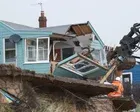
At least 183 homes have been demolished across the English east coast since 2010 due to the advancing shoreline and landslides. These demolitions were not typically the result of sudden collapses but were proactive measures taken by local authorities who judged the properties too dangerous for continued occupation. The total cost of these clearing operations reached £1.1 million, though the financial burden is split between the Environment Agency, local councils, and the homeowners themselves.
According to figures obtained by the Guardian, the Environment Agency provided roughly £482,000 to assist in the demolition of 61 properties that were at immediate risk of collapsing. The remaining costs for the other 122 homes were covered by various local councils or paid for directly by the residents living in those vulnerable structures.
Which regions are most affected by shoreline retreat?
The East Riding of Yorkshire and Great Yarmouth areas have seen the highest number of residential demolitions. The East Riding of Yorkshire council, which manages vulnerable communities such as Mappleton, Aldbrough, and Skipsea, has overseen the demolition of 66 homes since 2010. This represents the highest volume of proactive demolitions among the nine most vulnerable local authorities identified in a House of Commons environment, food and rural affairs committee (EFRA) report.
In East Anglia, the Great Yarmouth borough council (GYBC) has demolished 64 homes since 2010, with the entirety of these losses occurring in the village of Hemsby. The rate of erosion in this area is accelerating significantly; a GYBC spokesperson noted that in a single winter, the Hemsby dunes experienced approximately 50% of the erosion that had been predicted for a 30-year period. This resulted in the loss of more than 10 metres of land in just over 12 months.
Regional breakdown of demolitions since 2010
The impact is geographically concentrated in specific coastal pockets where the geological makeup makes the land particularly susceptible to the elements.
- East Riding of Yorkshire: 66 homes demolished, including areas in Skipsea and Mappleton.
- Great Yarmouth (Hemsby): 64 homes demolished, with 41 removed since December 2025 alone.
- North Norfolk: 21 homes proactively demolished to prevent emergency situations.
- East Suffolk: A sharp increase in activity was noted recently, with 16 demolitions occurring between May 2024 and April 2025.
What is the long-term risk to English infrastructure?
The Environment Agency (EA) forecasts that the scale of property loss will increase dramatically over the coming decades as sea levels rise and storm frequency intensifies. Current estimates suggest that 3,500 properties in England are at risk of coastal erosion by 2055. This figure is expected to climb to more than 10,000 properties by the year 2105.
The threat extends beyond residential housing to critical transport networks that serve small coastal communities. According to the EA, the following infrastructure is at risk over the next 80 years:
- Minor roads: 107 miles of road networks.
- Major roads: More than 6 miles (10km) of primary routes.
- Railways: 3.5 miles of track.
As the coastline retreats, the cost of maintaining these links becomes increasingly difficult, forcing a choice between expensive engineering solutions and the managed retreat of entire communities.
Why is there no insurance for coastal erosion?
Unlike flood damage, which can often be mitigated through the Flood Re scheme, coastal erosion remains largely uninsurable for seaside homeowners. This is because insurance providers do not categorize coastal retreat as an accidental or sudden event. Instead, according to the EFRA committee report, insurers view the loss of land due to erosion as a "virtual certainty" for certain coastal locations.
This lack of coverage creates a severe financial crisis for residents. For example, one resident in East Suffolk, Hilary Lightfoot, reported a loss of £650,000 following the demolition of her home. Such homeowners often find themselves forced to deplete pension savings or take on significant debt to secure new housing, as there are currently limited mechanisms to support the wider costs of relocation and adaptation.
The financial gap in coastal adaptation
While the government has provided some relief, the scale of the problem often outpaces the available aid. The Environment Agency has announced £36m for coastal erosion adaptation pilots and offers £10,000 grants to assist with the safe demolition of affected properties. However, these funds are often earmarked for specific pilot schemes or the physical act of demolition, leaving a gap in support for the total economic loss experienced by families.
How is the climate crisis accelerating the erosion process?
The combination of rising sea levels, increased storminess, and specific geological vulnerabilities is speeding up the rate at which the UK's shores retreat. Sophie Day, a senior research associate at the University of East Anglia, explains that the east coast is composed of sandy, gravelly, and silty materials, making it inherently more susceptible to being washed away.
Wetter winters, a phenomenon linked to the climate crisis, saturate these soft cliffs and cause them to become unstable. When combined with higher tides and more frequent storms, the beaches have less time to recover between weather events. This cycle creates an "illusion of permanence" where sea defences may provide temporary protection but cannot stop the long-term trend of land loss.
Experts suggest that the focus must shift from trying to stop the sea to managing the retreat. This involves planning for the inevitable loss of infrastructure and engaging in difficult conversations with residents about the viability of their homes well before an emergency occurs.
Frequently asked questions
Why are homes being demolished before they fall into the sea?
Local councils proactively demolish homes when they are deemed too structurally vulnerable to remain safely occupied. This preventative approach is taken to avoid the dangers and costs associated with emergency situations where a property might suddenly collapse into the sea or become a life-threatening hazard.
Is there insurance available for homes lost to coastal erosion?
There is currently no standard UK insurance product that covers coastal erosion. Insurers treat the retreat of the shoreline as a predictable, "virtual certainty" rather than an accidental risk, meaning homeowners often bear the full financial brunt of losing their property and land.
How many properties are expected to be at risk by 2105?
The Environment Agency estimates that more than 10,000 properties in England will be at risk from coastal erosion by the year 2105. This represents a massive increase from the 3,500 properties currently projected to be at risk by 2055.
What is the role of the Environment Agency in this crisis?
The Environment Agency provides funding for demolition, supports local authorities with adaptation pilots, and offers grants of up to £10,000 for safe property removal. They also work on reducing planning red tape in vulnerable areas to better manage the retreating coastline.
Can sea defences stop coastal erosion indefinitely?
Scientific research suggests that while sea defences can slow the process, they often create a false sense of security. Due to rising sea levels and increased storm intensity, experts believe the long-term strategy must eventually shift toward accepting and managing the retreat of the coastline.
Key takeaways
- At least 183 homes in England have been demolished due to erosion since 2010.
- The Environment Agency estimates 10,000 properties will be at risk by 2105.
- Coastal erosion is largely uninsurable because it is viewed as a certainty.
- East Riding of Yorkshire and Hemsby have recorded the highest demolition rates.
Looking ahead to coastal management
The increasing frequency of shoreline retreat presents a fundamental challenge to the stability of English coastal communities. As the gap between physical protection and geological reality widens, the focus is shifting from permanent sea defences toward managed retreat and community adaptation. The financial and social costs for displaced residents remain high, highlighting a critical need for more robust support mechanisms as the scale of the threat grows toward the end of the century.




