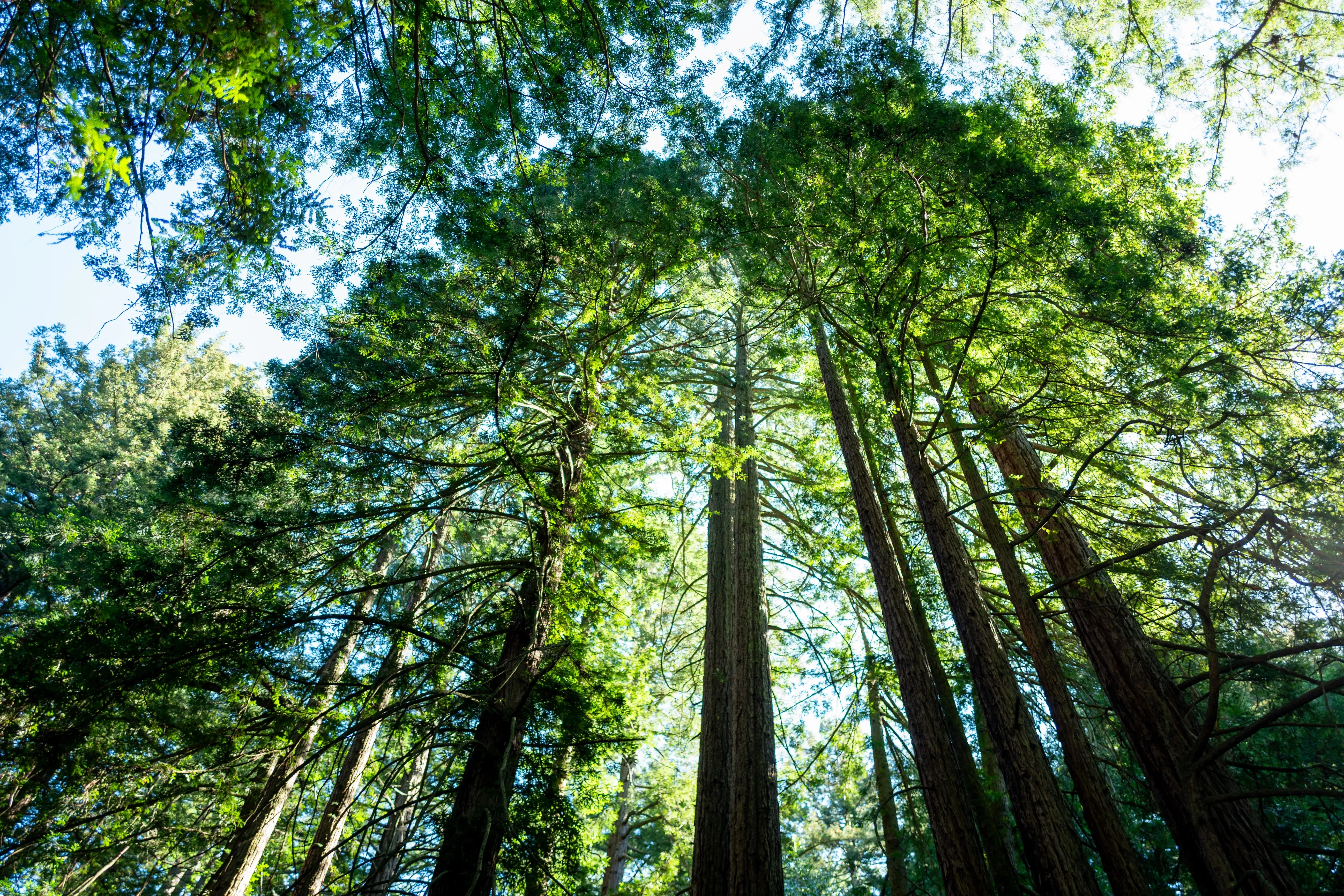
How do coast redwoods respond to extreme heat?
Coast redwoods have a specific vulnerability to rising temperatures: they essentially dial down their photosynthesis when their environment becomes too hot. A new study from researchers at the University of California, Davis, utilized measurements taken twice a month over a two-year period to observe this phenomenon. The researchers found that during periods of extreme heat, coast redwood leaves essentially stop their "breathing" and "eating" processes.
This happens because of the way trees manage their stomata—the tiny pores in their leaves used to take in carbon dioxide and release water. When temperatures rise, the leaves, which act as light-absorbing objects, heat up even faster than the surrounding air, much like asphalt in the sun. To cool down, trees can open their stomata to allow water to transpire, a process similar to human sweating. However, this cooling mechanism is entirely dependent on water availability. When the heat becomes too intense or water becomes too scarce, the trees hit a threshold where they cannot cool down fast enough and must keep their stomata closed to conserve water. This prevents the intake of carbon dioxide, effectively halting photosynthesis.
What is carbon starvation in redwood trees?
The inability to take in carbon dioxide during heat waves leads to a phenomenon known as "carbon starvation." Because leaves are expensive for a plant to build, they require a steady supply of energy to maintain and replace. When stomata remain closed for extended periods, the tree is not building up the energy stores it needs to grow or replenish its foliage. This can create a vicious cycle: a lack of stored carbon means the tree cannot efficiently produce new leaves, which in turn reduces its ability to photosynthesize in the future, potentially leading to death.
This issue is particularly pressing for the majority of California's current redwood forests, which consist of relatively new-growth stands planted in the last few centuries. Unlike their old-growth ancestors, these younger trees are in a stage of rapid growth—much like adolescents—and require high levels of carbon dioxide uptake to reach their full height. Furthermore, because redwoods are incredibly efficient at storing carbon, any reduction in their growth has global implications. Anthony Ambrose, a plant physiological ecologist and co-founder of the Ancient Forest Society, notes that reduced sequestration is a negative feedback on the climate system, as these trees will simply not grow as large as they once did.
Impacts on canopy ecosystems
The physiological stress on the trees has profound implications for the "forests within forests" that exist hundreds of feet above the ground. Redwood canopies are complex, elevated ecosystems where mats of soil and ferns develop over time, supporting a unique array of life. These mats provide habitat for creatures like the wandering salamander, which can spend its entire life cycle entirely within the canopy, and the marbled murrelet, a seabird that nests high above the forest floor.
If heat stress prevents redwoods from growing to their full potential, the physical space available for these canopy ecosystems may shrink. As trees struggle to maintain their bulk, the development of soil and fern mats could be compromised. "If they experience really excessive heat throughout the summer," Ambrose warns, "then the soil mats and ferns will probably dry out much faster. And then those salamanders and birds might not be able to live there." This suggests that the heat stress experienced by the trees could trigger cascading effects that destabilize the entire layered ecosystem.
Why is coastal fog declining for redwoods?
A central part of the redwood's survival strategy is its relationship with coastal fog. Because redwoods are so tall, their canopies reach into fog layers, allowing them to sip water directly from the sky. This fog also provides essential shade and helps create a cool microclimate, making redwood forests noticeably cooler than the surrounding areas. However, this natural "air conditioner" is failing. Due to warmer oceans and drier air, fog frequency has declined by an estimated 30 to 40 percent.
This decline creates what plant ecophysiologist Todd Dawson calls a "double whammy." The trees are facing simultaneous heat stress and a loss of their primary source of hydration and protection. Redwoods are adapted to a very narrow temperature range, typically between 8 and 27 degrees Celsius (46 to 80 degrees Fahrenheit). As California experiences longer periods of much warmer days and the buffering effect of the fog diminishes, the trees are pushed further outside their evolutionary comfort zone.
Will redwoods recover after heat waves pass?
There is a glimmer of hope in the short term. Lily Klinek, a PhD student at UC Davis and the lead author of the study, noted that the leaves observed during the two-year study did not lose their capacity to photosynthesize once the heat passed; they appeared to recover as temperatures returned to normal in the fall and winter. However, this recovery is not guaranteed to persist in a changing climate.
The primary concern is the frequency and intensity of future weather events. While the trees can currently recover between heat waves, Klinek cautions that if temperatures continue to rise and heat waves become more frequent over the next five to ten years, we do not know if the trees will have the capacity to rebound. The potential for cumulative stress remains a significant unknown for these long-lived giants.
Frequently asked questions
How do redwoods cool themselves?
Redwoods use transpiration to cool their leaves. By opening their stomata, they allow water to evaporate from the leaf surface, which lowers the temperature, similar to how sweating cools humans.
What happens when redwoods close their stomata?
Closing stomata conserves water, which is vital during heat, but it also prevents the tree from taking in carbon dioxide. This stops photosynthesis and leads to a reduction in energy stores.
Why is fog important for redwood growth?
Fog provides direct hydration to the canopy and creates a shaded, cool microclimate that helps the trees stay within their preferred temperature range.
Can heat stress affect animals in the forest?
Yes. If heat stress and lack of fog cause canopy soil mats and ferns to dry out, the specialized animals that live there, such as certain salamanders and birds, may lose their habitats.
Key takeaways
- Coast redwoods reduce photosynthesis by closing stomata during extreme heat to prevent water loss.
- This physiological response can lead to "carbon starvation," limiting tree growth and energy storage.
- A 30 to 40 percent decline in coastal fog removes a critical cooling and hydration source.
- Reduced tree growth may shrink the canopy habitats used by species like the wandering salamander and marbled murrelet.
- While trees showed recovery after current heat events, increased frequency of heat waves could prevent future recovery.
- Redwood forests are among the world's most effective carbon sinks, making their health vital to climate stability.
Conclusion
The findings from the UC Davis study highlight a growing vulnerability in one of California's most iconic species. The combination of rising temperatures and declining fog creates a dual threat that challenges the very biology of the coast redwood. While these trees have survived for millennia and can withstand wildfires, the rapid shift in their thermal and hydrologic environment presents a new kind of challenge. Whether the redwoods can continue to recover from heat waves or if they will succumb to the cumulative effects of carbon starvation remains a critical question for the coming decade.