
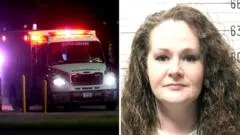
Confusion delays emergency response at Riverbend Prison
Emergency services faced critical delays during the botched Christa Pike execution due to uncertainty among first responders and prison officials. According to recordings released by the Nashville Department of Emergency Communications, dispatchers and responders struggled to verify the legitimacy of the distress calls coming from the execution chamber at Riverbend Prison.
The recordings illustrate a breakdown in communication protocols. In one instance, a dispatcher is heard questioning whether the request for medical aid was a genuine emergency or a malicious act. The dispatcher noted the need to determine if the call was an actual event requiring an ambulance and police assistance, or if it was a "prank calling or, like, swatting us." This hesitation occurred while the inmate was in a life-threatening state.
This period of verification meant that minutes passed without the arrival of medical professionals. The confusion between Tennessee prison officials and external agencies like the police and highway patrol created a vacuum in decision-making. Such delays are particularly scrutinized in capital punishment cases, where the protocol for medical intervention is intended to be immediate should a procedure fail.
Legal counsel pleads for life-saving intervention
Defense attorney Kelly Gleason was among those attempting to secure urgent medical care for Pike during the failed procedure. The recordings capture Gleason making direct pleas for help, emphasizing the immediate danger to her client's life. She stated that Pike was "still alive and breathing and needs immediate life-saving care," according to the released audio.
The urgency expressed by the defense highlights the disconnect between the legal team's observations and the response from state authorities. While the attorney was witnessing a medical crisis in real-time, the emergency dispatchers were still engaged in verifying the authenticity of the situation. This gap between the realization of a botched execution and the deployment of medical resources remains a central point of concern for legal observers.
The involvement of the defense in calling for emergency services underscores the chaotic nature of the scene at Riverbend Prison. It suggests that the standard internal protocols for notifying medical services were either insufficient or failed to function as intended during the administration of the lethal injection.
The history and circumstances of the Pike case
Christa Pike, 50, was the subject of a death sentence stemming from a 1995 murder case involving Colleen Slemmer. Pike was convicted of the murder, which she committed alongside her then-boyfriend. After decades of legal proceedings, the state attempted to carry out the sentence on 30 September.
The execution attempt involved the administration of two injections of the drug pentobarbital. However, the procedure did not result in the intended outcome. Instead of a swift death, the administration led to a medical crisis that required Pike to be transported to a hospital in critical condition. The failure of the pentobarbital to work as expected has brought renewed scrutiny to the methods used in Tennessee's death penalty protocols.
The transition from the execution chamber to a hospital setting marks a rare and highly controversial turn in capital punishment proceedings. It raises questions regarding the efficacy of pentobarbital and the preparedness of prison facilities to handle complications during lethal injections. The legal and medical fallout from this event is expected to be extensive, given the documented delays in response.
FAQ
What caused the delay in the Christa Pike execution response?
The delay was caused by confusion among first responders and Tennessee prison officials. Dispatchers spent several minutes attempting to verify if the emergency calls from Riverbend Prison were legitimate or if they were victims of "swatting" or prank calls, preventing an immediate medical response.
Who reported the need for medical aid during the procedure?
Kelly Gleason, the defense attorney for Christa Pike, was recorded calling for help. She explicitly stated that Pike was still breathing and required immediate life-saving care, highlighting the critical state of the inmate during the botched administration of the lethal injection.
What drug was used in the failed execution attempt?
The execution attempt utilized pentobarbital. According to the reported details, Pike survived two injections of the drug on 30 September, which subsequently necessitated her transfer to a hospital in critical condition following the failure of the procedure to conclude as planned.
Conclusion
The release of these emergency calls provides a troubling look into the operational failures at Riverbend Prison. The tension between the defense's urgent pleas and the dispatchers' skepticism reveals a systemic breakdown in communication that directly impacted the medical response for Christa Pike. As the legal community examines the implications of these delays, the incident serves as a significant case study in the complexities and potential failures of lethal injection protocols. The intersection of administrative hesitation and medical emergency during a state-sanctioned execution raises profound questions regarding the accountability and efficiency of the Tennessee death penalty process.




