
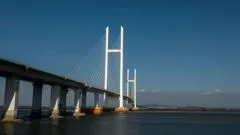
Why was the New Yalu River Bridge delayed for 12 years?
Construction of the New Yalu River Bridge began years ago but faced repeated setbacks. North Korea stopped work on its side of the project, including roads and customs facilities, after relations with Beijing cooled. The opening had originally been planned for 2014. Chinese state media reported the bridge finally opened in October 2026. The delay reflected periods of tension over North Korea's nuclear activities and Beijing's concerns about stability on the border.
What is the New Yalu River Bridge and where does it connect?
The New Yalu River Bridge spans 3km across the river from Dandong in China to Sinuiju in North Korea. It provides an alternative to the older Sino-Korean Friendship Bridge built during Japanese occupation between 1937 and 1943. Chinese officials described the new crossing as an important facility for connectivity that will support trade and exchanges between the two countries.
Trade capacity and infrastructure details
The bridge is expected to become the main land route for goods moving between the neighbours. Chinese Foreign Ministry spokesperson Mao Ning stated that the route would further facilitate trade and people-to-people exchanges. No specific capacity figures were released at the opening.
How will the bridge affect trade between China and North Korea?
Bilateral trade reached $2.7bn last year, recovering to pre-pandemic levels and driven mainly by Chinese exports. Professor Kang Jun-young of Hankuk University of Foreign Studies noted that a sharp increase in trade remains unlikely while UN sanctions stay in place. He added that Pyongyang is cautious about a sudden rise in Chinese imports that could expand Beijing's influence inside its market. Trade is therefore expected to grow gradually.
What does the bridge opening reveal about current China-North Korea relations?
The two countries maintain a mutual defence treaty, their only such agreement for China. Relations have improved after cooler periods in the 2010s linked to North Korea's nuclear tests. Chinese President Xi Jinping visited Pyongyang in June 2026, and direct flights and passenger trains resumed earlier in the year. Observers see the bridge as evidence that ties are strengthening following Xi's visit.
How do sanctions and regional ties shape the relationship?
UN sanctions on North Korea remain in force because of its nuclear and missile programmes. Professor Edward Howell of Oxford University observed that Beijing now says little about denuclearisation compared with a decade ago. North Korea's growing ties with Russia, including troop deployments to Ukraine and oil supplies from Moscow, have prompted Beijing to reassert influence. The new bridge forms part of that effort.
Frequently asked questions
When did the New Yalu River Bridge open?
The bridge opened in October 2026 after construction delays that began more than a decade earlier. Chinese state media confirmed the launch.
What is the length of the New Yalu River Bridge?
The structure measures 3km and crosses the Yalu River between Dandong, China, and Sinuiju, North Korea.
Why is the bridge important for trade?
It will serve as the main land route for goods between the two countries and is expected to support gradual growth in bilateral trade currently valued at $2.7bn annually.
Are UN sanctions still affecting trade?
Yes. Sanctions remain in effect, limiting the pace of any trade increase across the new bridge according to academic observers.
Has China-North Korea cooperation increased recently?
Yes. Flights, train services and a presidential visit in 2026 preceded the bridge opening, signalling warmer ties after earlier tensions.
Key takeaways
The New Yalu River Bridge opened in October 2026 after a 12-year delay caused by halted construction on the North Korean side.
The 3km crossing links Dandong in China with Sinuiju in North Korea and replaces the older Sino-Korean Friendship Bridge as the main trade route.
Bilateral trade reached $2.7bn last year, returning to pre-pandemic levels but remaining constrained by UN sanctions.
China and North Korea maintain a mutual defence treaty and have shown improving relations through resumed transport links and a 2026 presidential visit.
North Korea's ties with Russia have prompted Beijing to strengthen its own engagement with Pyongyang.
Conclusion
The opening of the New Yalu River Bridge marks a concrete step in the gradual improvement of China-North Korea relations. While sanctions continue to limit rapid trade growth, the new infrastructure provides a foundation for expanded connectivity. Recent diplomatic moves, including resumed flights and a presidential visit, indicate both sides are managing their longstanding alliance amid shifting regional dynamics. Trade is likely to increase steadily rather than suddenly.




