
What were the findings of the trial regarding the Channel small boats disaster?
The Paris court convicted six individuals of involuntary homicide for their direct responsibility in the Channel small boats disaster that claimed 31 lives in November 2021. The trial established that the vessel involved was fundamentally unfit for maritime travel, described by the charge sheet as being of poor quality, uncertified, and unsuitable for open-sea navigation. Furthermore, the boat was dangerously overloaded and lacked the necessary correct life jackets for all passengers.
The sentencing reflected the varying degrees of involvement among the 14 defendants. The six primary convicts received prison terms between six and 10 years. Seven additional individuals were handed lesser sentences of up to four years, while one person was acquitted of all charges. The court's decision follows a complex investigation that utilized phone tracking to dismantle the connections between two distinct criminal organizations.
The scale of the tragedy
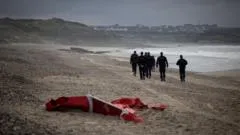
The disaster occurred in the early hours of 24 November 2021, after the vessel issued desperate distress calls to both French and British coastguards. The loss of life was immense, including a seven-year-old child. Among the deceased were primarily Iraqi Kurds, alongside individuals from Afghanistan, Egypt, and Iran. The survival rate was staggeringly low, with only two men surviving the wreck.
How were the smuggling networks organized?
The trial revealed that the crossing was orchestrated through the cooperation of two separate criminal networks: one composed of Iraqi Kurds and the other of Afghans. These groups worked in tandem to manage the logistics of the journey, coordinating the movement of migrants to specific meeting points for the final cross-channel leg.
The prosecution identified key figures within these networks, though not all were present for the proceedings. For instance, the alleged leader of the Iraqi Kurd network, identified as Bashdar, remains in custody in Iraq and was not a defendant in this trial. However, his close aide, Harem Ahmed Abawaker, was sentenced to eight years in prison. The heaviest sentence of 10 years was handed to Obaidullah Maroofkhel, the leader of the Afghan network, who was tried in his absence.
The roles within these networks were tiered. While the leaders organized the high-level logistics, other members were responsible for more localized tasks, such as:
- Sheltering migrants in transit.
- Transporting individuals across France toward the "jungle" camp near Calais.
- Providing logistical assistance on the actual night of the departure.
What impact did the trial have on the victims' families?
The legal proceedings provided a platform for the families of the deceased to share the human cost of the smuggling operations. Several family members traveled from Iraqi Kurdistan to Paris to provide testimony, a move that lawyer Matthieu Chirez noted helped to "humanise the families of victims." The testimony highlighted the desperation that drives individuals toward such perilous journeys.
Families recounted the difficult process of monitoring their loved ones' progress through Turkey, Italy, and France after paying deposits at banks in Iraqi Kurdistan. The emotional weight of the loss was illustrated through personal anecdotes, such as the story of Twana, whose brother shared a final photo from the Eiffel Tower before the tragedy. Another father, Nabi Mustafa Mina, described his failed attempts to dissuade his 19-year-old son, Zanyar, from leaving in search of a better life.
The survivor, Issa Omar, also provided a statement through his lawyer. He described the psychological trauma of the event, stating that since the wreck, he feels as though "part of me disappeared beneath the waves." His lawyer detailed the harrowing conditions of his survival, noting that Omar had to cling to floating bodies and life jackets, fighting to stay awake and keep swimming to remain alive.
Is there an investigation into the emergency response?
A separate and significant police investigation is currently underway concerning the conduct of the French armed forces during the night of the disaster. This inquiry focuses on seven members of the military who were either on board a navy ship or stationed at the regional sea rescue centre at the time of the distress calls.
The allegations suggest that these individuals may have ignored the distress signals sent by the sinking vessel. The investigation aims to determine if there was a failure to provide necessary assistance to the migrants in distress. A formal decision regarding whether to recommend these individuals for criminal trial is expected to be reached in the coming months.
What are the implications for cross-channel migration policy?
The conclusion of the trial coincides with a major shift in bilateral migration management between France and the United Kingdom. Both nations have announced the termination of the "one-in one-out" scheme, a program designed to manage irregular cross-channel arrivals.
Under the previous arrangement, the British government would return irregular migrants to France, while France would accept individuals with a high probability of being granted asylum. The program, which facilitated the transfer of just over 1,000 migrants, was deemed ineffective by French authorities. The consensus among officials was that the scheme failed to disrupt the established business models used by the smuggling networks responsible for tragedies like the Channel small boats disaster.
Key takeaways
- Six traffickers received prison sentences of 6 to 10 years for involuntary homicide.
- The 2021 shipwreck resulted in 31 deaths, including a seven-year-old child.
- Two distinct smuggling networks, Iraqi Kurd and Afghan, coordinated the journey.
- An investigation is ongoing into seven French military members for allegedly ignoring distress calls.
- The UK and France have ended the "one-in one-out" migrant transfer scheme.
FAQ: Channel small boats disaster
Who was convicted in the smuggling trial?
Six people traffickers were convicted of involuntary homicide and received sentences between six and 10 years. Additionally, seven other individuals received sentences of up to four years, while one defendant was found not guilty of the charges related to the 2021 shipwreck.
What caused the boat to sink in November 2021?
The vessel was described as being of poor quality, uncertified, and unsuitable for sea navigation. It was also dangerously overloaded and lacked the correct number of life jackets, which contributed to the disaster after the boat sent distress calls to coastguards.
How many people died in the disaster?
A total of 31 migrants lost their lives in the accident. The victims were primarily Iraqi Kurds, but the group also included individuals from Afghanistan, Egypt, and Iran. Only two men survived the incident in the English Channel.
Are the leaders of the smuggling networks being prosecuted?
While some leaders were tried, others remain at large or in different jurisdictions. Obaidullah Maroofkhel, the Afghan network leader, was tried in his absence, while the alleged leader of the Iraqi Kurd network, Bashdar, is currently in custody in Iraq.
Why is the French military being investigated?
Police are investigating seven members of the French armed forces for allegedly ignoring distress calls from the boat. The investigation seeks to determine if those at the regional sea rescue centre or on navy ships failed to respond to the emergency.
Conclusion
The conviction of the traffickers involved in the Channel small boats disaster marks a significant legal milestone in addressing the criminal networks driving irregular migration. By holding the organizers of the uncertified and overloaded vessel accountable for involuntary homicide, the French court has provided a measure of justice for the 31 victims and their families. However, the ongoing investigation into the military's response and the termination of the UK-France migration scheme highlight the persistent complexities of maritime safety and border management in the English Channel. The legal outcome underscores the devastating human cost of the smuggling industry's operational negligence.