
What happened during the Flydubai FZ1073 hijacking attempt?
The Flydubai flight FZ1073, traveling from Dubai to Tel Aviv, experienced a life-threatening emergency approximately two and a half hours into its flight. The aircraft, carrying more than 170 passengers, suddenly plunged more than 17,000 feet (5,200m) after a violent struggle in the cockpit. According to reports, the flight initially transmitted an emergency signal to air traffic controllers before the transponder was switched to squawk code 7500, the international aviation signal indicating a hijacking in progress.
Israeli Prime Minister Benjamin Netanyahu stated to the media that the incident involved one pilot stabbing the other in an apparent attempt to crash the aircraft. The sudden loss of altitude and the hijacking signal alerted authorities and passengers to the extreme danger the flight was facing. The situation required immediate, decisive action from both the flight crew and the passengers on board to prevent a total loss of control. The chaos within the flight deck was mirrored by the terrifying descent of the aircraft, which had been flying normally until the struggle began.
The technical indicators of the crisis
The switch to squawk 7500 is a critical moment in aviation security, as it provides immediate, unambiguous notification to ground controllers that the crew is under duress. In the case of FZ1073, this signal was accompanied by a rapid descent of over 5,200 meters, indicating that the pilots had lost control of the aircraft's pitch and altitude due to the struggle in the flight deck.
This massive drop in altitude—over 17,000 feet—was a physical manifestation of the loss of cockpit control. When the transponder was set to 7500, it signaled to air traffic controllers that the situation had escalated from a technical emergency to a security crisis involving a hijacking. The combination of the sudden altitude loss and the hijacking code created a high-stakes environment for controllers and authorities monitoring the flight's progress toward its destination in Tel Aviv.
How did Captain Smit Machchhar defend the cockpit?
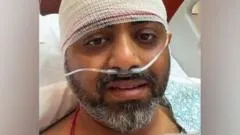
Captain Smit Machchhar, an Indian pilot with 17 years of experience, fought to maintain control of the aircraft while being physically attacked by his co-pilot. Despite sustaining injuries, Machchhar focused on ensuring the safety of the 170+ passengers on board. In a video call with Indian Prime Minister Narendra Modi, Machchhar described the intense struggle, noting that he was lying on the floor injured while the plane was sinking.
Machchhar's primary objective during the assault was to regain access to the flight controls. He stated that he told himself to make "one last push to open the door from inside" so that others could assist in managing the crisis. His ability to function despite his injuries was crucial; he told the Prime Minister that his experience allowed him to understand the aircraft's state "even with my eyes closed." This instinctive knowledge of flight dynamics, built over nearly two decades of flying, likely contributed to the crew's ability to stabilize the descent and eventually land the aircraft.
"I was of course fighting for my own life but at the same time I knew I was not going to let others die," Machchhar told Prime Minister Modi. This determination drove him to push past his physical injuries to ensure the cockpit was no longer isolated from the help needed to control the plane.
What role did passengers and reserve pilots play in the landing?
The resolution of the crisis was a collective effort involving passengers, reserve pilots, and the surviving captain. After the co-pilot's attack, fellow passengers managed to overpower the assailant, preventing further damage to the flight deck or the aircraft's control systems. This intervention was vital in neutralizing the immediate threat within the cabin and the cockpit area, allowing the situation to move toward stabilization.
The aircraft's safe arrival was secured by two reserve pilots who happened to be traveling on the flight as passengers. These individuals took over the controls to navigate the crippled aircraft to a safe landing. The flight eventually touched down at Tabuk Airport in north-western Saudi Arabia at 06:58 local time. The successful emergency landing prevented the plane from crashing, despite the massive altitude loss and the violence that had occurred in the cockpit.
Once the passengers had overpowered the attacker, the presence of the reserve pilots meant that the technical expertise required to land the plane was immediately available. This prevented the crisis from escalating into a crash, as the reserve pilots were able to take command of the flight following the struggle between the primary crew members.
The emergency landing at Tabuk Airport
Landing an aircraft after a hijacking attempt and a rapid descent is a high-stress maneuver that requires precise coordination. The presence of the reserve pilots allowed for a controlled approach to Tabuk Airport, ensuring that the 170 passengers could be evacuated without further incident. The landing marked the end of a high-altitude crisis that had begun with a stabbing and a sudden 17,000-foot drop.
The arrival at Tabuk Airport at 06:58 local time provided the necessary ground support to manage the aftermath of the hijacking attempt. While the plane was safely on the ground, the intensity of the preceding flight—marked by the sudden plunge and the fight for the cockpit—meant that emergency protocols were immediately activated for both the passengers and the injured crew.
What is the current health status of Captain Machchhar?
Captain Smit Machchhar is currently in stable condition and is undergoing medical treatment. Following the landing in Saudi Arabia, he was initially treated at a hospital in Tabuk before being airlifted to Abu Dhabi for specialized care. The Indian embassy in the UAE confirmed on Thursday that the pilot is in good health and is recovering well from his injuries.
Despite the severity of the attack, Machchhar has maintained a resilient outlook on his recovery. In his communications, he expressed a determination to return to full health, stating that he views his injury not as a wound that hinders him, but as a "journey" that requires time. "I am not looking at this wound like a wound because that would make my recovery even more difficult," Machchhar said. "I am looking at it as a journey which is slowly going on and will take time but I am confident that the recovery will be there and I will become fit and healthy again."
The Indian Ambassador to the UAE, Deepak Mittal, expressed great pride in the captain's bravery and noted that he felt reassured after meeting him. The pilot's recovery is being monitored closely as he transitions from the initial emergency medical response in Saudi Arabia to specialized care in Abu Dhabi.
The global aviation community and political leaders have responded with widespread praise. Prime Minister Narendra Modi commended Machchhar's courage, patience, and quick decision-making, stating that his actions saved numerous lives. The pilot's ability to remain focused on the safety of his passengers while fighting for his own life has led many to describe him as a hero. Indian social media has also been awash with praise for him since his identity emerged.
Frequently asked questions
What is squawk code 7500?
Squawk code 7500 is a specific transponder setting used by pilots to alert air traffic control that the aircraft is experiencing a hijacking. When this code is entered, it serves as a silent distress signal, notifying controllers of the emergency without alerting the hijackers on board.
How many people were on Flydubai flight FZ1073?
There were more than 170 passengers on board Flydubai flight FZ1073 at the time of the cockpit attack. The aircraft was on a scheduled flight from Dubai to Tel Aviv when the incident occurred early on Wednesday morning.
Where did the plane land after the attack?
The aircraft successfully landed at Tabuk Airport, located in north-western Saudi Arabia. The landing took place at 06:58 local time and was executed by reserve pilots who were traveling on the flight as passengers.
What was the cause of the plane's sudden descent?
The plane's descent of more than 17,000 feet was caused by a violent struggle in the cockpit. During the attack, the co-pilot allegedly stabbed the captain, leading to a loss of control over the aircraft's altitude and flight path.
Is Captain Smit Machchhar still in critical condition?
No, Captain Machchhar is reported to be in stable condition. After receiving initial treatment in Tabuk, he was airlifted to Abu Dhabi, where the Indian embassy confirmed he is recovering well and remains in good health.
Key takeaways
- Captain Smit Machchhar prevented a crash by fighting a co-pilot during a hijacking attempt.
- Flight FZ1073 lost over 17,000 feet of altitude during the cockpit struggle.
- The aircraft was safely landed at Tabuk Airport by reserve pilots on board.
- Captain Machchhar is currently in stable condition and recovering in Abu Dhabi.
Conclusion
The hijacking attempt on Flydubai flight FZ1073 stands as a harrowing example of the extreme risks present in aviation security. Through the extraordinary bravery of Captain Smit Machchhar and the rapid intervention of passengers and reserve pilots, a potential mass-casualty event was averted. While the physical and psychological impact of such an attack is profound, Machchhar's resilience and the successful emergency landing at Tabuk Airport highlight the critical importance of pilot training and passenger alertness in managing in-flight crises.