
What are the confirmed casualties from the CFB Wainwright fire?
At least four service members have been confirmed dead following the intense blaze that swept through the training grounds. Beyond the fatalities, the scale of the medical emergency is significant, with 39 people currently receiving hospital treatment. Of these patients, 19 are reported to be in critical condition due to the severity of their injuries.
The nature of the injuries has complicated the recovery efforts. Officials have noted that many of the casualties suffered severe burns, which necessitates long-term and intensive medical care. While the government has not officially stated whether the death toll is expected to rise, the critical status of nearly half of the hospitalized individuals suggests a high level of medical volatility.
The scale of the medical emergency
The influx of patients was so sudden and severe that it triggered emergency protocols in the region. The Royal Alexandra Hospital in Edmonton was forced to declare a 'code orange'—a specific disaster response protocol used when a high-casualty incident threatens to overwhelm hospital resources. This protocol remained in effect from Saturday evening until Sunday afternoon, reflecting the sustained pressure on the healthcare system. According to Alberta's health service, the emergency response was a massive undertaking involving 22 ambulances and eight aircraft to transport the injured. A physician speaking to the Canadian public broadcaster CBC described the facility as having been 'completely overwhelmed' by the sudden arrival of patients.
How did the fire start and what is the current investigation?
The fire originated on a training range at approximately 16:00 local time on Saturday. Major-General Wade Rutland, the Commander of 1st Canadian Division, stated that the incident began as a grass fire. The situation escalated rapidly because of uncommonly strong winds that not only accelerated the spread of the flames but also caused the fire to shift direction unexpectedly, catching soldiers mid-exercise.
Investigators are currently working to determine the exact catalyst for the initial ignition. While the military has confirmed that the cause remains under investigation, they have addressed several theories that circulated during the early hours of the crisis. Initial reports from local media suggested the fire might have been triggered by a gas main being struck during live firing drills. However, the military has since clarified that investigators do not believe any explosions involving oil or gas infrastructure were responsible for the event.
Terrorism and intentionality
As the investigation progresses, the Canadian defence ministry has sought to provide clarity regarding the intent behind the fire. The ministry stated that there are currently no indications to suggest that the blaze was the result of any terrorist activity. This distinction is critical as authorities work to differentiate between a tragic accident during training and a deliberate act of sabotage or external aggression.
What is the impact on the Canadian military and the local area?
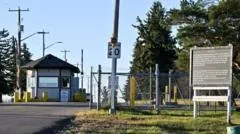
The fire has struck one of the most vital training hubs in the Canadian Army. Canadian Forces Base Wainwright is a major installation located in a rural part of Alberta, situated roughly 120 miles from Edmonton and 180 miles from Calgary. Because the base serves as a primary training ground for the Army and its airfield is utilized by the Royal Canadian Air Force, the disruption to training schedules and operational readiness is expected to be significant.
The scale of the base means that the human impact is widespread. While the population of the base fluctuates, it can host more than 1,000 personnel at any given time. The sudden loss of life and the injury of dozens of service members represent a profound blow to the military community and the families of those stationed at the facility.
How did the emergency services respond to the disaster?
The firefighting effort was a coordinated response between military and civilian crews who worked through the night under extreme conditions. Prime Minister Mark Carney praised the bravery of these responders, noting that they risked their lives in 'some of the worst conditions imaginable' to protect both military personnel and the surrounding Canadian population.
The logistical complexity of the response was immense. The ten-hour emergency window required a massive mobilization of resources across the province of Alberta. The combination of ground ambulances and air transport was essential to move the high volume of critical patients from the rural training area to specialized trauma centers in the city.
Key takeaways
- Four service members are confirmed dead and 19 remain in critical condition following the fire.
- The fire started as a grass fire on a training range and was spread by strong winds.
- Military officials have ruled out explosions from gas or oil infrastructure as a cause.
- There are currently no indications of terrorist involvement in the incident.
- The Royal Alexandra Hospital implemented a code orange disaster protocol to manage the influx.
Frequently asked questions
Where is CFB Wainwright located?
Canadian Forces Base Wainwright is located in a rural area of Alberta, Canada. It is positioned approximately 120 miles (193km) from Edmonton and 180 miles (290km) from Calgary, the two largest cities in the province. It is a major training site for the Army and Air Force.
What caused the fire at the military base?
The official cause is still under investigation by the Canadian defence ministry. Major-General Wade Rutland reported that a grass fire on a training range ignited and was spread rapidly by uncommonly strong winds. The military has ruled out gas or oil infrastructure explosions.
Was the fire an act of terrorism?
No, there is currently no evidence to support that theory. The Canadian defence ministry has explicitly stated that, at this time, there are no indications that the fire was the result of any terrorist activity during the training exercises.
How many people were injured in the fire?
A total of 39 people were taken to the hospital following the incident. Among these patients, 19 are in critical condition, many of whom are suffering from severe burns sustained during the rapid spread of the flames.
What is a 'code orange' in a hospital setting?
A code orange is a disaster response protocol used by hospitals to manage a high-casualty incident. In this case, the Royal Alexandra Hospital used it to prepare for the overwhelming number of patients arriving from the CFB Wainwright fire.
Conclusion
The fire at CFB Wainwright represents a catastrophic event for the Canadian military, resulting in significant loss of life and widespread injury. As the investigation continues to peel back the layers of how a grass fire transformed into a deadly conflagration, the focus remains on the recovery of the 39 injured personnel. The scale of the emergency response in Alberta underscores the severity of the incident. For the Canadian Armed Forces, the tragedy serves as a grim reminder of the unpredictable risks inherent in large-scale training exercises, even in peacetime.




