
Why is the Burnham Zelensky meeting significant for UK diplomacy?
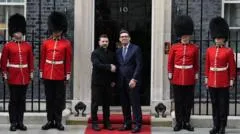
The arrival of President Volodymyr Zelensky at Downing Street represents a notable shift in UK diplomatic protocol, evidenced by a military ceremonial guard welcoming him outside Number 10. While Number 10 stated they could not find an official record of such a welcome for other foreign leaders on Downing Street, the gesture underscores the high priority the British government places on the Ukrainian cause.
This visit is the second since Andy Burnham assumed the role of Prime Minister. It occurs at a moment of extreme geopolitical tension, specifically regarding the alignment of Western powers. The Prime Minister's objective is not merely ceremonial; it is a strategic attempt to bolster Ukraine's position while navigating a changing political landscape in the United States. By hosting Zelensky with such high honors, the UK is signaling its continued role as a primary European ally to Kyiv, even as the relationship with the US administration becomes more complex.
The symbolic weight of the Downing Street welcome
The ceremonial guard serves as more than just a tradition; it is a clear communicative tool. In the realm of international relations, the level of protocol afforded to a head of state communicates the strength of the bilateral relationship. By providing a military welcome at the heart of British political power, Burnham is attempting to provide Zelensky with the political capital necessary to maintain international momentum, despite recent setbacks in Washington.
How will the Trump Russia diesel deal affect international support?
President Donald Trump's decision to strike a deal with Moscow to import Russian diesel has created a significant rift in the unified front against Russian aggression. This move involves the suspension of sanctions on diesel from Moscow, allowing millions of tonnes of fuel to enter the US market. According to President Zelensky, this arrangement acts as a direct financial lifeline to the Kremlin, providing the necessary funds to sustain the ongoing conflict in Ukraine.
The reaction from Western leaders has been polarized. While some, like Liberal Democrat leader Sir Ed Davey, have described the move as a "shameful betrayal" of both Ukrainian people and European security, Prime Minister Burnham has adopted a more cautious, rehabilitative stance. Rather than engaging in direct condemnation of the US President, Burnham has focused on the necessity of "repairing bridges." This approach suggests a pragmatic recognition that maintaining a functional, if strained, dialogue with the US is essential for long-term stability, even if current US policy diverges from European security interests.
The impact of diesel imports on the war effort
The economic implications of the diesel deal are profound. By lifting sanctions on specific Russian energy products, the US has effectively provided a mechanism for Moscow to recoup significant portions of its war chest. This complicates the efforts of European nations and international bodies to use economic leverage to force a cessation of hostilities. The tension between US energy policy and European security needs is now a central friction point in the Western response to the war.
What military and financial aid is the UK promising Ukraine?
Prime Minister Burnham has explicitly stated that President Zelensky will not leave the United Kingdom "empty-handed," promising that further military and financial support packages will be finalized in the coming weeks. This commitment comes at a critical juncture, as Ukraine faces a severe winter and ongoing infrastructure damage. The UK's strategy appears to be one of acceleration, particularly regarding high-priority defensive capabilities.
The UK government plans to implement several key measures to bolster Kyiv's resilience:
- Air Defence Acceleration: The UK will speed up the delivery of air defence missiles to protect Ukrainian cities and energy infrastructure.
- Increased Sanctions: Burnham is expected to use the visit to signal a commitment to further sanctions against the Russian Federation.
- Diplomatic Pressure: The UK will urge its international allies to increase the level of pressure exerted on Moscow.
- Energy Sector Focus: Chancellor John Healey is utilizing International Monetary Fund (IMF) meetings to advocate for a comprehensive ban on Russian liquefied natural gas (LNG).
Addressing the energy infrastructure crisis
The urgency of this aid is underscored by the humanitarian situation on the ground. Zelensky has reported that at least 600,000 people across Ukraine have been left without electricity following recent Russian missile and drone strikes. These attacks have targeted "critical" energy infrastructure, a move that Zelensky argues is designed to break the civilian will during the winter months. The UK's focus on air defence is a direct response to this specific vulnerability.
What is the current status of the ceasefire and energy warfare?
There is a significant discrepancy between the claims made by US leadership and the reality reported by the Ukrainian government regarding the security of energy infrastructure. President Trump has claimed that a ceasefire regarding strikes on energy facilities is currently in place between Russia and Ukraine. However, Zelensky's reports of widespread blackouts and successful strikes on critical facilities suggest that no such stability exists.
The conflict over energy facilities has become a tit-for-tat cycle of retaliation. Ukraine has expressed a willingness to halt its own strikes on Russian oil refineries and energy hubs, provided that Moscow implements a reciprocal cessation of attacks. However, the Russian government has shown no inclination toward such a compromise. Russian Foreign Minister Sergey Lavrov has stated that Ukraine does not deserve the "respite" that a ceasefire would provide, indicating a policy of continued targeting of Ukrainian utility networks.
The disconnect in diplomatic narratives
The gap between Trump's assertion of a ceasefire and Zelensky's reports of active strikes highlights a dangerous fragmentation in the international narrative. For Ukraine, the lack of a functional ceasefire means that the energy grid remains a primary battlefield. For the US administration, the claim of a ceasefire may serve a different political or diplomatic agenda, but it fails to align with the tactical reality reported by those on the ground in Kyiv.
Frequently asked questions
Why did the UK provide a military welcome to Zelensky?
The military ceremonial guard at Downing Street is a symbolic gesture intended to demonstrate the UK's high level of support for Ukraine. While Number 10 noted no previous record of such a welcome for foreign leaders at this specific location, it serves to elevate the importance of the visit.
How does the Russian diesel deal affect Ukraine?
President Zelensky has characterized the US decision to import Russian diesel as a financial gift to the Kremlin. He argues that the revenue generated from these sales provides Moscow with the necessary funds to continue its military operations and sustain the war against the Ukrainian people.
What kind of military aid is the UK providing?
The UK is focusing on accelerating the delivery of air defence missiles to protect Ukraine's critical infrastructure. Additionally, the Prime Minister has promised that further military and financial support packages will be drawn up and delivered in the weeks following the Zelensky visit.
Is there a ceasefire on energy infrastructure strikes?
There is a contradiction regarding this issue. President Trump has claimed a ceasefire is in place, but President Zelensky reports that recent Russian missile and drone strikes have left 600,000 people without electricity, indicating that energy infrastructure remains a target.
What is the UK's stance on Russian LNG?
The UK is actively pushing for more stringent economic measures against Russia. Chancellor John Healey is using international platforms, such as IMF meetings, to advocate for a global ban on the import of Russian liquefied natural gas (LNG) to further isolate the Russian economy.
Key takeaways
- Prime Minister Burnham is using the Zelensky visit to attempt to repair diplomatic ties between the US and Ukraine.
- The UK is accelerating the delivery of air defence missiles to protect Ukraine's energy grid.
- President Trump's deal to import Russian diesel has caused significant tension regarding Western support for Kyiv.
- At least 600,000 Ukrainians are currently without electricity due to recent Russian strikes on infrastructure.
- The UK is advocating for a ban on Russian liquefied natural gas through the IMF.
Conclusion
The meeting between Prime Minister Andy Burnham and President Volodymyr Zelensky represents a pivotal moment in the UK's foreign policy. By offering a high-profile military welcome and promising accelerated military aid, the UK is positioning itself as a steadfast ally to Kyiv during a period of intense geopolitical volatility. While the diplomatic rift caused by the US decision to import Russian diesel presents a significant challenge to a unified Western front, the UK's focus on repairing these 'bridges' and strengthening Ukraine's defensive capabilities remains a central priority in the face of a severe winter and ongoing Russian aggression.




