
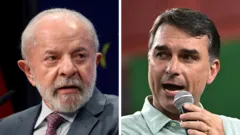
How did the first round of the Brazilian election unfold?
Flávio Bolsonaro secured 47% of the vote in the first round, narrowly outpacing President Lula da Silva, who received 45%. While Lula had been polling slightly ahead during the campaign, the final tally suggests a significant shift in momentum toward the right-wing candidate. Because neither candidate achieved an outright majority, the election will proceed to a second-round run-off on 25 October.
The results represent a major victory for the Liberal Party (PL), which not only supported Bolsonaro's candidacy but also saw widespread success across other levels of government. According to the election results so far, the party secured the highest number of governors, senators, and federal deputies elected. This legislative strength suggests that if Bolsonaro wins the presidency, he will possess substantial influence within the Brazilian Congress to implement his agenda, as the party is expected to have the most influence in the legislature.
The outcome has left the political landscape deeply divided. Bolsonaro, 45, expressed great satisfaction with the results, stating he was "very happy" to have led Lula in the first round. He expressed confidence that he would clinch a victory in the run-off in three weeks, telling AFP that Brazil would soon choose a "modern government." Conversely, Lula, 80, admitted the result was "unexpected," noting he had been convinced he would win in the first round. However, the incumbent insisted the race is far from over, framing the upcoming weeks as "extra time" where he intends to win over the Brazilian people.
The shadow of Jair Bolsonaro
The political landscape is heavily influenced by the legacy of former president Jair Bolsonaro. Currently serving a 27-year prison sentence for masterminding a failed coup attempt after losing the 2022 election, Jair Bolsonaro remains a central figure in his son's campaign. Although Jair Bolsonaro was banned from running for re-election even before his imprisonment, he endorsed his eldest son, Flávio, to run in his place.
Flávio Bolsonaro has explicitly campaigned on a platform of amnesty, promising to pardon his father and the supporters responsible for the January 8 riots. This familial connection underscores the deep polarization within the country. The election is increasingly framed as a choice between two starkly different visions: Bolsonaro describes his mission as wanting to "free the Brazilian people," while Lula has warned that the choice facing voters is between democracy and "barbarism."
The demographic divide is equally sharp. Flávio Bolsonaro finds strong support in the south of the country, among wealthier voters, and evangelical Christians. In contrast, Lula maintains a stronghold in Brazil's poorer northeast, among low-income voters, Catholic populations, and women. This split reflects the intense polarization that has characterized Brazilian politics since the 2022 election, which Lula won by less than 2% of the vote—the closest result in the nation's history.
What are the primary drivers behind voter decisions?
Voters in this election cycle focused heavily on corruption, crime, and economic stability. Corruption became a central issue following a scandal involving Daniel Vorcaro, a jailed banker who orchestrated one of Brazil's largest financial frauds. The scandal embroiled senior figures across the political spectrum, complicating the campaign for both major candidates.
Bolsonaro acknowledged asking Vorcaro to bankroll a biopic about his father after voice recordings emerged in which he could be heard asking for 134 million reais ($25.9m; £19.5m). Lula was also indirectly impacted by the scandal after police suggested Vorcaro had reached out to Supreme Court judge Alexandre de Moraes to seek help in avoiding arrest. While Moraes denies any wrongdoing, the incident added a layer of complexity to the corruption debate, especially given that Moraes is seen as an ally of Lula, having presided over Jair Bolsonaro's coup trial.
Security concerns also played a pivotal role. Although Brazil's homicide rate has fallen, highly visible street crimes, such as phone thefts, have increased, creating a sense of insecurity. The candidates offered contrasting solutions to these issues:
- Flávio Bolsonaro: Has pledged to designate Brazilian criminal gangs as terrorist organizations and intends to construct maximum-security prisons modeled after those used in El Salvador.
- Lula da Silva: Has focused on reforming the financial networks of organized crime, improving homicide investigations, and investing in prisons.
How will the election impact Brazil's economy and social welfare?
The economic outlook remains a central pillar of the presidential race, as Brazil grapples with high levels of personal debt and slowing growth. The candidates' proposed fiscal paths are fundamentally opposed, reflecting their differing ideological foundations regarding the role of the state.
President Lula's economic legacy is tied to social welfare initiatives, most notably Bolsa Família, which pays families to ensure children receive healthcare and stay in education. These programs are credited with lifting millions of Brazilians out of poverty. Lula has also supported oil drilling exploration—a move that has drawn criticism from environmentalists—despite a record of tightening environmental protections and reducing Amazon deforestation. This stands in contrast to the presidency of Jair Bolsonaro, during which deforestation increased significantly.
Conversely, Flávio Bolsonaro has proposed a more conservative fiscal approach. He has pledged to implement a public debt ceiling, enact government spending cuts, and pursue a revision of social welfare programs. Additionally, he has signaled a desire to bolster the critical minerals sector as a key component of his economic strategy.
What is the impact on US-Brazil diplomatic relations?
The outcome of the run-off will likely redefine Brazil's standing on the global stage, particularly regarding its relationship with the United States. Currently, much of Latin America has elected right-wing presidents aligned with the Trump administration, and a Bolsonaro victory would see Brazil follow suit.
A Flávio Bolsonaro presidency would likely see Brazil join the "Shield of Americas" coalition, a US-led initiative focused on combating narco-trafficking, leading to closer alignment with the US. This contrasts with Lula's emphasis on "sovereignty," as he has at times accused the US of attempting to influence Brazilian elections—an accusation the US has denied. The relationship has already faced tension; last year, Donald Trump used the coup trial of Jair Bolsonaro as a justification for imposing tariffs on Brazil and sanctioning certain officials and judges.
The president of Brazil's supreme electoral court stated on Sunday that no evidence of international interference was found in the election. However, the geopolitical implications remain significant, as the run-off on 25 October will determine whether Brazil maintains a more independent foreign policy or integrates more closely with US security and political frameworks.
Frequently asked questions
When is the second round of the Brazilian election?
The run-off election is scheduled to take place on 25 October. This second round will determine the winner between Flávio Bolsonaro and Lula da Silva, as neither candidate secured an outright majority in the first round.
Who are the main candidates in the run-off?
The two candidates are Flávio Bolsonaro, a 45-year-old right-wing politician from the Liberal Party, and the incumbent President Lula da Silva, 80, who is seeking a fourth term. Flávio is the son of former president Jair Bolsonaro.
What are the main campaign issues in Brazil?
The campaign has been dominated by four key themes: corruption (highlighted by the Daniel Vorcaro scandal); crime and insecurity (specifically rising street crime); the economy (addressing high debt and slowing growth); and national sovereignty.
How did the first round voting results break down?
In the first round, Flávio Bolsonaro received 47% of the votes, while President Lula da Silva received 45%. This result was unexpected for Lula, who had been polling slightly ahead during the campaign.
What is the significance of the Liberal Party's results?
The Liberal Party (PL) did not just perform well in the presidential race; it also secured the highest number of elected governors, senators, and federal deputies, meaning it is expected to have the most influence in Congress.
Key takeaways
- Flávio Bolsonaro leads the first round with 47% of the vote against Lula's 45%.
- A decisive presidential run-off is scheduled for 25 October.
- The Liberal Party secured a dominant position in the legislative elections, including governors and senators.
- The election outcome will determine if Brazil aligns with the US "Shield of Americas" or maintains a focus on sovereignty.
Conclusion
The first round of Brazil's presidential election has set the stage for a high-stakes confrontation between the right-wing Flávio Bolsonaro and the left-wing incumbent Lula da Silva. With Bolsonaro holding a narrow lead and his party dominating the legislative results, the momentum appears to be shifting. However, Lula's insistence that the race is entering "extra time" highlights the intense competition that remains. As the country moves toward the 25 October run-off, the decision will not only shape Brazil's domestic economic and security policies but also redefine its geopolitical relationship with the United States and the broader Latin American region.
