
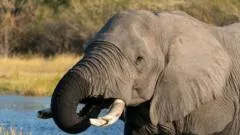
Why has the slaughter of 23 elephants sparked international and local criticism?
The decision by the Botswana Ministry of Environment and Tourism to authorize the killing of 23 elephants for independence festivities has ignited a debate regarding the ethics of using protected species for celebratory feasting. According to the Elephant Protection Society, the move risks undermining long-term conservation efforts by potentially normalizing the killing of elephants in the eyes of the public.
Oaitse Nawa, chairman of the Elephant Protection Society, expressed significant concern that sanctioned killings could inadvertently encourage poaching. He argued that when a government validates the slaughter of elephants for social events, it creates a dangerous impression that these animals are acceptable targets. Beyond the legal implications, Nawa highlighted the sociological impact on the herds, noting that elephants are frequently displaced by gunfire, which disrupts their essential social structures.
Local sentiment is similarly divided. While some residents participated in the distribution of the meat, others questioned the choice of species. Tshenatshe Monwela, an elder from the tourism town of Maun, suggested that buffalo would have been a more appropriate choice for communal feasting. He emphasized that elephants hold unique cultural and ecological significance that distinguishes them from other game animals.
The impact of social disruption on elephant herds
The disruption caused by hunting extends beyond the immediate loss of life. As noted by conservationists, the frequent presence of gunshots and the subsequent displacement of herds can lead to the breakdown of complex social hierarchies within elephant populations. These animals rely on stable social bonds for survival, learning, and protection, and constant movement driven by human activity can leave them vulnerable to other environmental stressors.
What are the risks regarding public health and distribution logistics?
Public health concerns have emerged alongside the ethical debate, specifically regarding the consumption of game meat during an active outbreak of foot-and-mouth disease. Some social media users in Botswana expressed hesitation about eating meat from these hunts while authorities are working to contain the spread of the disease.
Furthermore, the physical distribution of the meat has been criticized for being unorganized and potentially unhygienic. In the Chobe district, a region rich in wildlife near the borders of Namibia, Zambia, and Zimbabwe, reports surfaced of residents gathering around carcasses to collect meat directly. This method of distribution raised concerns about sanitation and social equity.
MP Simasiku Mapulanga addressed these issues on social media, highlighting the chaos observed at a school where residents were reportedly scrambling for portions of meat. He advocated for a more dignified and sanitary approach, suggesting that the meat should be processed into standardized 5kg or 10kg packages. This would ensure a fairer distribution and prevent the congestion and physical risks faced by elderly people, pregnant women, and people with disabilities during the chaotic collection process.
How does the government justify regulated hunting in Botswana?
The Botswana government views regulated hunting as a vital tool for both economic development and wildlife management. While the country hosts more than 130,000 elephants—the world's largest population—the presence of these animals creates significant friction with human settlements.
Proponents of the current policy argue that the revenue generated from hunting is reinvested into the very environments the animals inhabit. Minister of Environment and Tourism Wynter Mmolotsi stated in parliament that special elephant quotas generated 15.6 million pula (approximately $1.1 million or £820,000) in 2025. These funds are earmarked for development projects in elephant-inhabited areas, theoretically providing a financial incentive for local communities to coexist with wildlife.
The political landscape regarding hunting has shifted over recent years. In 2014, under former President Ian Khama, trophy hunting was banned. However, the restrictions were lifted five years later under President Mokgweetsi Masisi. The current administration, led by President Duma Boko, has continued this policy of regulated hunting as a means of managing the population and generating community income.
The economic argument for hunting revenue
The core of the government's defense lies in the direct link between hunting fees and rural development. By placing a monetary value on the wildlife, the state aims to provide local communities with the resources necessary to mitigate the damage caused by animals. This includes funding for infrastructure and community projects that might otherwise be neglected in remote areas where human-elephant conflict is most acute.
What drives the ongoing human-wildlife conflict in the region?
The primary driver of conflict in Botswana is the increasing overlap between elephant ranges and human agricultural or residential zones. As elephant populations grow, they frequently move into areas where they cause significant damage to crops, destroy property, and pose a physical threat to human lives.
For rural communities living on the fringes of wildlife-rich districts, the presence of elephants is often viewed more as a liability than a national treasure. These communities bear the direct costs of living alongside large mammals, including lost livelihoods due to crop destruction and the constant risk of injury or death. Supporters of the hunting policy argue that international conservationists often fail to account for these local realities when criticizing Botswana's management strategies.
This tension creates a complex policy environment. On one hand, there is the global imperative to protect a flagship species and maintain biodiversity; on the other, there is the immediate necessity of protecting the safety and economic stability of Botswana's citizens. The decision to use elephant meat for independence celebrations has essentially placed these two competing interests at the center of a national milestone.
FAQ: Botswana elephant slaughter
Why were the elephants killed for the anniversary?
The elephants were killed to provide meat for traditional feasting associated with Botswana's 60th independence anniversary. The Ministry of Environment and Tourism issued licenses for the hunting of 23 elephants and other wild animals specifically for these "complimentary purposes" during the diamond jubilee celebrations.
What is the main conservation concern?
The main concern, raised by groups like the Elephant Protection Society, is that sanctioned killings could normalize the slaughter of elephants. This could potentially encourage illegal poaching and disrupt the essential social structures of the elephant herds through the use of gunfire and displacement.
How does hunting revenue benefit Botswana?
According to Minister Wynter Mmolotsi, regulated hunting quotas generate significant revenue, such as the 15.6 million pula raised in 2025. These funds are intended to support conservation efforts and local development projects in the specific areas where elephants reside.
Are there health risks associated with the meat?
Yes, some citizens have expressed concerns regarding the consumption of game meat due to an ongoing outbreak of foot-and-mouth disease. This has led to calls for caution as authorities implement measures to contain the spread of the disease within the country.
How has hunting policy changed recently?
Hunting policies have fluctuated with changes in leadership. A ban on trophy hunting was implemented in 2014 under Ian Khama, but was lifted five years later by Mokgweetsi Masisi. The current administration under President Duma Boko has maintained the practice of regulated hunting.
Key takeaways
- The Botswana government authorized the slaughter of 23 elephants for 60th independence anniversary feasts.
- Conservationists warn that sanctioned killings may encourage poaching and disrupt elephant social structures.
- In 2025, special elephant hunting quotas reportedly raised 15.6 million pula for local development.
- Human-wildlife conflict persists as Botswana's 130,000 elephants frequently damage crops and property.
Conclusion
The decision to utilize elephant meat for Botswana's diamond jubilee has highlighted the deep-seated complexities of wildlife management in Southern Africa. While the government views regulated hunting as a necessary mechanism for generating conservation revenue and managing human-wildlife conflict, critics see it as a threat to both ecological stability and ethical standards. As the country balances the needs of its rural communities with its responsibilities as a custodian of the world's largest elephant population, the debate over how to honor national heritage without compromising biodiversity remains unresolved.