Why is the beauty industry struggling with sustainability claims?
The lack of international standardization allows brands to create their own rules, often leading to consumer confusion and the rise of 'greenwashing.' Without a unified global strategy, sustainability efforts remain fragmented and inconsistent across the sector.
Marketing terms like 'clean beauty' are frequently used to imply products are natural or organic, even when they may not meet those specific criteria. Millie Kendall, CEO of the British Beauty Council, has noted that such buzzwords can be dangerous as they are often used to drive sales rather than provide genuine environmental assurance. As customers become more aware of these shortcomings, these terms are losing some of their previous traction in markets like the UK.
The complexity of ingredient transparency
Transparency is the primary tool for addressing consumer skepticism, yet achieving it is difficult due to varying definitions of what constitutes a 'safe' or 'natural' ingredient. For instance, Jen Lee, chief impact officer at Beautycounter, points out that consumers often mistakenly believe natural ingredients are inherently safer. In reality, natural components can contain heavy metals or other toxic loads. Conversely, synthetic ingredients are sometimes necessary to ensure product stability and performance, especially in high-temperature manufacturing processes where purely organic materials might fail to maintain consistency.
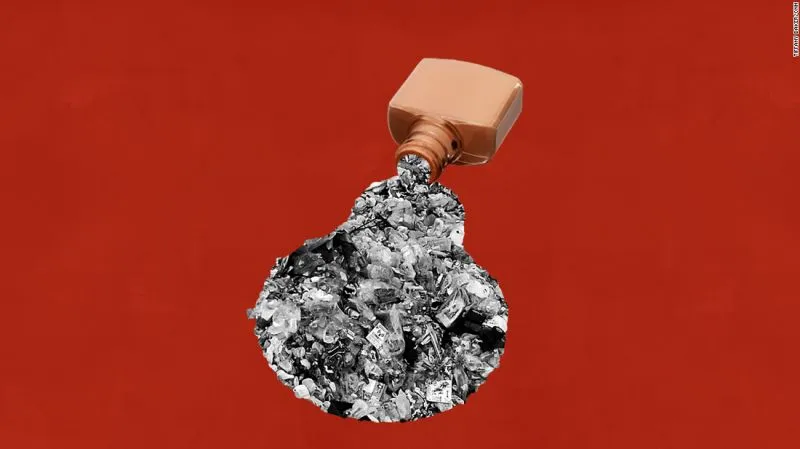
How significant is the impact of plastic packaging waste?
Cosmetic packaging represents a massive environmental burden, with the industry ranking as the fourth largest user of plastic packaging globally. According to Vantage Market Research, plastic accounts for approximately 67% of the industry's total packaging volume.
The scale of waste is illustrated by the massive volumes used by industry leaders. In 2021, L’Oreal utilized 144,430 metric tons of plastic for its packaging, according to the Ellen Macarthur Foundation (EMF). During the same year, Estee Lauder Companies reported producing 71,600 metric tons of plastic packaging. The disposal of these materials is a major hurdle, as the British Beauty Council reports that 95% of beauty packaging is thrown away, and the vast majority of it is never recycled. This is compounded by global recycling limitations; the OECD reports that only 9% of global plastic waste is actually recycled, while the United States recycles only 4% of its plastic waste.
What are the hurdles to adopting recycled plastics?
Many brands are attempting to transition to post-consumer recycled (PCR) plastic, but supply shortages and high costs present significant barriers to widespread adoption.
While some companies have set ambitious targets—such as L’Oreal aiming for 50% PCR plastic usage by 2025 and Estee Lauder targeting at least 25%—reaching these goals is difficult. Sander DeFruyt, Plastic Initiative Lead at the Ellen Macarthur Foundation, notes that while 60-70 major global brands have made progress in PCR usage, true impact requires simultaneously reducing the use of virgin and single-use plastics.
The economic reality of PCR plastic is a major deterrent. Because global recycling rates are low, the supply of recycled material is limited, driving up competition and prices. Frédéric Fekkai, founder of the hair care brand FEKKAI, explained that PCR plastic is more expensive than standard stock plastic and is increasingly difficult to source due to massive global demand. This economic pressure has forced some brands to scale back their ambitions, such as FEKKAI moving from higher targets to aiming for at least 50% PCR content.
How do retail standards influence brand behavior?
Beauty retailers hold significant power over the industry through their stocking decisions, yet their sustainability criteria vary widely between different platforms.
Some retailers have implemented specific labeling systems to help consumers navigate choices. For example, Sephora launched its 'Clean + Planet Positive' initiative in 2021, while Target introduced its 'Target Zero' icon in 2022 to highlight products that are recyclable, compostable, or feature reduced plastic. However, these retail-led initiatives often focus on the end product rather than the broader environmental impact of the entire supply chain, including manufacturing and shipping processes.
There is also a notable difference in how smaller versus larger companies approach these challenges. Jessi Baker, founder of the technology platform Provenance, suggests that smaller, 'born-good' brands often move more nimbly because sustainability is integrated into their core culture. In contrast, large multinational corporations must undergo much more complex structural changes to overhaul their existing supply chains.
Why is regulation necessary for industry-wide change?
The current beauty ecosystem relies heavily on voluntary certifications and inconsistent regional laws, creating a landscape where 'the floor' for safety and sustainability is uneven.
While certifications like B Corp provide a way for ethical companies to signal their values, they remain entirely voluntary. Experts argue that meaningful change requires government intervention to establish baseline regulations for sustainability claims and waste management. Susanne Kaufmann, founder of her namesake brand, has highlighted how inconsistent international garbage disposal laws hinder progress; for example, packaging that is fully recyclable in Austria may end up in landfills in the US because of a lack of proper waste separation.
The gap between US and EU standards
Regulatory discrepancies are particularly evident in ingredient safety. The European Chemicals Agency bans 2,495 substances in cosmetic products, whereas the US Food and Drug Administration lists only 11. This gap was highlighted in a 2021 study by the Environmental Working Group, which found that only 35% of tested sunscreens met EU standards, compared to 94% that passed US standards. While Mia Davis of Credo Beauty suggests that regulation can 'raise the floor,' she maintains that market leadership and private sector initiative remain the most effective drivers of change.
Frequently asked questions
What is greenwashing in the beauty industry?
Greenwashing occurs when companies use misleading marketing language to make their products appear more environmentally friendly or natural than they actually are. This often involves using vague terms like 'clean beauty' without providing the necessary substantiation or standardized certification to prove their environmental claims are accurate.
Why is PCR plastic harder to use than virgin plastic?
PCR (post-consumer recycled) plastic is more difficult to use because it is more expensive and harder to source. Because global recycling rates are low, there is a limited supply of recycled material, creating high competition and higher costs compared to newly manufactured virgin plastic.
Is 'natural' always better for the environment?
Not necessarily. While natural ingredients are often perceived as safer, they can still carry a heavy toxic load, such as heavy metals. Furthermore, the cultivation of natural ingredients can sometimes involve non-regenerative farming practices that contribute to pollution and environmental degradation.
How much beauty packaging actually gets recycled?
The recycling rates for beauty packaging are very low. According to the British Beauty Council, 95% of beauty packaging is thrown away, and the vast majority of that is not recycled. Globally, only about 9% of all plastic waste is successfully recycled.
Can retailers help make beauty more sustainable?
Yes, retailers influence sustainability through their supply chain decisions and the standards they set for the brands they carry. By creating specific labels for eco-friendly products, retailers can guide consumer behavior, though these programs often focus on packaging rather than the full manufacturing lifecycle.
Key takeaways
- The $500 billion beauty industry faces significant challenges in packaging waste and ingredient transparency.
- Only 9% of global plastic waste is recycled, leaving much of beauty packaging in landfills.
- 'Greenwashing' remains a major issue due to a lack of international standards for 'clean beauty.'
- Regulatory gaps between the US and EU create inconsistent safety and environmental standards.
Conclusion
The beauty industry stands at a crossroads between consumer demand for sustainability and the structural realities of global manufacturing. While individual brands and retailers are making strides through PCR plastic usage and new labeling initiatives, the lack of standardized international regulations allows for continued greenwashing and massive plastic waste. Moving forward, the industry requires more than just voluntary certifications; it needs a combination of market leadership and stricter, uniform global regulations to ensure that 'green' ambitions translate into measurable environmental impact.