
What triggered the enforcement of the headscarf rules?
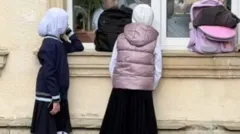
The education ministry began applying updated uniform standards on 13 October 2026. These standards prohibit clothing that conflicts with secular principles in state schools. Officials did not name the hijab specifically in the text. The policy followed earlier guidelines issued on 21 September and extended to teachers on 6 October. Enforcement led to immediate exclusions at school entrances across Baku and districts such as Masally and Jalilabad.
How did protests develop across Azerbaijan?
Groups of female pupils gathered outside schools in Baku suburbs including Balakhany and Mashtaga. Videos showed students holding banners stating that the hijab does not block education. One mother, Shahiza Huseynova, was detained after protesting in the Mashtaga district. Her husband reported she received a warning to remove the headscarf or face prison. Interior ministry figures indicated 37 detentions on the first day for public order violations.
Which areas saw the strongest reactions?
Most demonstrations took place in religiously conservative neighbourhoods on the outskirts of Baku and in southern regions bordering Iran. Access to Instagram and TikTok became restricted without a VPN shortly after the protests started. An activist named Ilkin Huseynov launched an online platform offering volunteer lessons to excluded pupils. Friends reported he was taken from his home on 15 October and contact was lost.
Why did the dispute extend to Turkey?
Turkey maintains close ties with Azerbaijan, described by both sides as one nation with two states. Turkish officials criticised the restrictions. Chief adviser Oktay Saral called the measures unacceptable and urged reversal. Several governing party MPs echoed the view. Small protests occurred outside Azerbaijani diplomatic missions in Ankara and Istanbul. Azerbaijan's ruling party accused Turkish figures of running a defamatory campaign and warned against interference in domestic affairs.
What role does regional influence play in the policy?
Azerbaijan is constitutionally secular and authorities monitor external religious influence. Over 60 percent of the population identifies as Shia. Officials have expressed concern about Iranian religious networks, given the large Azerbaijani population inside Iran. On 13 October a pro-Iranian hacker group claimed attacks on more than 100 state websites. The government has also maintained ties with Israel, which supplies weapons and purchases oil, adding another layer to regional balancing.
Frequently asked questions
What exactly do the new uniform rules prohibit?
The rules ban any clothing that contradicts secularism in state schools. They were approved on 21 September and applied from 13 October without naming the hijab directly.
How many people were detained during the protests?
The interior ministry stated that 37 individuals were detained on the first day for obstructing the rules and violating public order.
Has Turkey officially changed its stance toward Azerbaijan?
No formal change in diplomatic relations has occurred. The New Azerbaijan Party criticised specific Turkish comments but maintained the broader alliance framework.
Are students receiving alternative education?
An online platform called Let Leyli Go to School was created to provide free lessons from volunteer teachers to pupils excluded from class.
Why are social media platforms affected?
Users reported restricted access to Instagram and TikTok without a VPN after protests began, though authorities have not issued an official explanation.
Key takeaways
New uniform rules enforcing secularism took effect in Azerbaijani state schools on 13 October 2026.
Protests occurred mainly in Baku suburbs and southern districts near the Iranian border.
Thirty-seven people were detained according to interior ministry statements on the first day of enforcement.
Turkish officials criticised the policy and small demonstrations took place at Azerbaijani missions in Turkey.
Authorities detained at least one activist and one protesting parent in connection with the events.
The policy reflects long-standing efforts to limit external religious influence inside Azerbaijan.
Conclusion
The enforcement of secular dress codes in Azerbaijani schools has produced limited but visible protests and renewed friction with Turkey. Detentions of demonstrators and activists have accompanied the rollout. The episode highlights the government's determination to maintain constitutional secularism while managing relations with both Turkey and Iran. Future developments will depend on whether the rules remain in place and how families respond to continued exclusions from state education.




