
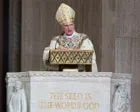
Religious opposition to the Pentagon's broadcast proposal
Archbishop Timothy Broglio has issued a formal statement criticizing the Pentagon's intent to broadcast the upcoming execution of Nidal Hasan. The Archbishop, who serves as the spiritual leader for Catholics within the United States military, argued that the decision to make the event public is fundamentally problematic. His opposition is rooted in both the nature of the broadcast and the specific methods of the execution.
Beyond the ethics of the livestream itself, Broglio addressed the direct participation of service members in the process. He explicitly advised Catholic soldiers who might be assigned to the firing squad to request an excuse from such duties. According to the Archbishop, participating in a firing squad is a direct violation of Catholic Church teachings. By making this distinction, he has placed the moral obligations of faith in direct tension with military assignments.
This stance aligns Broglio with a wider group of Catholic leaders who have consistently voiced opposition to the death penalty. The controversy is not merely about the legality of the execution but about the morality of turning a capital sentence into a public spectacle. The Archbishop's intervention highlights the potential for internal friction within the military when state-mandated procedures conflict with the deeply held religious convictions of its personnel.
Details of the Nidal Hasan execution
The scheduled execution involves Nidal Hasan, a former US Army psychiatrist who was convicted for his role in the 2009 Fort Hood attack in Texas. The attack, which resulted in the deaths of 13 people, remains a significant point of trauma for the military community. Hasan is currently slated to face a firing squad on 3 December.
The decision to move toward a public format was driven by high-level military leadership. Last week, US Defense Secretary Pete Hegseth announced that the execution would be public. This announcement was subsequently reinforced by a confirmation from the Pentagon that the event would be livestreamed. This shift represents a significant departure from traditional, private military executions.
The Archbishop's personal connection to the tragedy adds a layer of gravity to his criticism. Broglio noted that he previously presided over the funeral of Michael Grant Cahill, who was the sole civilian killed during the Fort Hood massacre. This personal history underscores the weight of the case, as the Archbishop weighs the necessity of justice against the potential harm caused by a televised execution.
Implications for the US military's global reputation
A primary concern raised by the Archbishop involves the potential damage to the international standing of the US armed forces. He questioned whether the visibility of such an event provides any genuine societal value, or if it merely serves to sensationalize a violent act. Broglio expressed concern that broadcasting the death of a man in a wheelchair could diminish the prestige the military has worked to maintain.
The Archbishop's critique focused on the optics of the event on the world stage. He questioned whether the Pentagon's actions might inadvertently align the military with the very tactics used by terrorists. By broadcasting the image of the execution to a global audience, he suggested that the military risks losing its moral high ground. He asked rhetorically whether there is any true benefit in exposing the entire world to such a display.
This debate touches on the concept of military professionalism and how it is perceived globally. While the execution is a legal proceeding under military law, the method of delivery—via livestream—introduces a modern, media-driven element that traditional military justice rarely encountered. The tension lies in whether the military should prioritize transparency or protect its institutional image from the perceived indignity of a public execution broadcast.
FAQ
Why is the Archbishop opposing the livestream?
The Archbishop is opposing the livestream because he believes it lacks clear societal purpose and risks damaging the global reputation of the US military. He argues that broadcasting the execution of a man in a wheelchair could be perceived as undignified and could align the military with terrorist tactics.
What are the instructions for Catholic soldiers?
Archbishop Timothy Broglio has advised Catholic soldiers who are assigned to a firing squad to ask to be excused from that duty. He stated that participating in such an execution is contrary to the fundamental teachings of the Catholic Church regarding the sanctity of life.
Who is Nidal Hasan?
Nidal Hasan is a former US Army psychiatrist convicted for the 2009 attack at Fort Hood, Texas, which killed 13 people. He is scheduled to be executed by a firing squad on 3 December, an event that the Pentagon has confirmed will be livestreamed.
Who announced the public execution?
The announcement that the execution would be public was made by US Defense Secretary Pete Hegseth. Following this announcement, the Pentagon confirmed that the proceedings would be broadcast via a livestream to a wider audience.




