
What is the objective of the upcoming UK-EU reset summit?
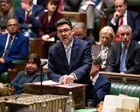
The primary goal of the November 20 summit is to establish a foundation of good faith through "significant but modest" agreements that could pave the way for a deeper long-term relationship. Prime Minister Andy Burnham has framed the summit as a necessary step to move past the current economic and diplomatic impasse. According to the Prime Minister's address to the House of Commons, the government views the existing relationship as "not good enough" for Britain's long-term prosperity.
The administration is targeting three specific areas for immediate progress:
- Food and drink: Establishing phytosanitary agreements to stabilize trade.
- Youth mobility: Creating frameworks for citizens under 30 to work and study across borders.
- Emissions trading: Aligning on environmental standards to facilitate smoother commerce.
If these initial deals are successfully ratified, the Prime Minister suggests they could catalyze a £10bn-a-year increase in economic growth. One EU diplomat noted that while these issues are relatively modest in scope, they serve as a critical test of whether the UK is a reliable partner for the "real reset" required in later negotiations.
How could the "Made in Europe" initiative impact UK manufacturing?
British industry faces significant risks from the EU's "Made in Europe" initiative, a protectionist framework designed to mitigate the influence of Chinese imports in strategic sectors. The initiative specifically targets industries such as renewable energy, nuclear power, and electric vehicle manufacturing. There is a growing fear among UK manufacturers that these rules could effectively lock British-made components out of vital European supply chains.
The Prime Minister has acknowledged these risks, pledging to raise the issue with his counterparts in Brussels. He argued that both the UK and the EU share a common challenge: managing the influx of Chinese exports and their potentially damaging effects on domestic industries. However, the diplomatic path forward is complicated by internal EU politics.
The political divide within the European Union
While the UK has found allies in the Netherlands, Poland, and Italy regarding the inclusion of UK components in these schemes, France has emerged as a primary obstacle. The EU's ability to reach a unified position remains uncertain, as lawmakers are still debating the Industrial Accelerator Act. EU sources have indicated that no formal agreement on the "Made in Europe" rules can be reached at the November summit because the bloc has not yet finalized its own internal stance. EU lawmakers are expected to deliberate on these key proposals through December.
What are the sticking points in the youth mobility and immigration debate?
Negotiations regarding youth mobility remain among the most difficult aspects of the UK-EU dialogue, primarily due to disagreements over participant numbers and financial costs. The proposed programme would allow citizens under the age of 30 to live, work, or study in either territory for up to three years. However, the specific terms regarding tuition fees for students and the total volume of mobility allowed remain unresolved.
On the broader issue of immigration, the government is attempting to navigate a narrow path between economic cooperation and political red lines. While the Prime Minister has stated that a return to the free movement of people is "not on the table" and that he will honour the Labour manifesto, he has stopped short of ruling out such a possibility for the distant future. This reflects a complex attempt to address public concerns regarding the "loss of immigration control" that followed Brexit.
Currently, the UK remains outside key European regulatory frameworks, such as the Eurodac biometric database and the Dublin regulation. Re-engaging with these systems would require significant concessions that the government is currently weighing against the potential benefits of improved migration management and intelligence sharing.
Why has the legitimacy of the Brexit referendum become a political flashpoint?
Recent comments by Prime Minister Andy Burnham regarding Russian interference in the 2016 Brexit campaign have sparked intense parliamentary debate. While the Prime Minister has clarified that he does not believe interference altered the final result, his questioning of the legitimacy of the outcome has drawn sharp criticism from opposition leaders. Kemi Badenoch, the Conservative leader, accused the Prime Minister of being "too loose with his language" regarding the Kremlin's role.
The Prime Minister defended his position by stating that it is a matter of record that Russian actors attempted to interfere in the 2019 general election, suggesting that such interference in 2016 was similarly likely. However, he has not provided specific evidence or identified the sources of the assessments he cited. Downing Street has moved to stabilize the narrative, with the Prime Minister stating he "absolutely" accepts the referendum result as legitimate.
Foreign Minister Stephen Doughty has supported this stance, asserting that while Russian interference was attempted, it ultimately failed to achieve its objectives. This tension highlights the ongoing difficulty the government faces in pursuing a "pragmatic" relationship with the EU without appearing to undermine the foundational democratic decisions that led to Brexit.
Frequently asked questions
What is the economic goal of the UK's new EU policy?
The government aims to secure a £10bn-a-year boost to the UK economy. This is expected to be achieved through new agreements on food standards, youth mobility, and emissions trading, which reduce trade barriers and foster closer cooperation with the European single market.
Will the UK rejoin the free movement of people?
The Prime Minister has explicitly stated that returning to free movement is "not on the table" for current discussions. He has pledged to uphold the Labour Party's manifesto red lines regarding immigration control, although he has not ruled out future changes in the long term.
What is the "Made in Europe" initiative?
The "Made in Europe" initiative is an EU strategy aimed at protecting strategic sectors—such as electric vehicles and renewable energy—from Chinese competition. It risks excluding UK-manufactured components from European supply chains if the UK does not achieve sufficient regulatory alignment.
How does the youth mobility programme work?
The proposed programme would allow citizens under the age of 30 to live, work, or study in either the UK or the EU for up to three years. Negotiations are currently focused on the total number of participants and the cost of tuition fees.
Did Russian interference change the Brexit result?
Prime Minister Andy Burnham has stated that he does not believe Russian interference affected the final outcome of the 2016 referendum. While he acknowledges that interference attempts likely occurred, he maintains that the Brexit result remains legitimate and respected by his government.
Key takeaways
- The UK-EU "reset" summit is scheduled for 20 November 2026 to discuss trade and mobility.
- Successful trade agreements could potentially provide a £10bn annual boost to the UK economy.
- The "Made in Europe" initiative poses a significant risk to UK manufacturing and supply chains.
- The government is seeking pragmatic cooperation on migration without returning to free movement.
- Political tensions remain regarding the impact of Russian interference on the 2016 referendum.
Conclusion
The approach taken by the Burnham administration represents a strategic attempt to move the UK-EU relationship into a more functional, albeit cautious, era. By focusing on specific, high-value sectors like food standards and youth mobility, the government hopes to reap economic rewards while maintaining the political integrity of the Brexit decision. However, the dual challenges of protectionist EU industrial policies and the sensitive nature of immigration control mean that the November summit is merely the beginning of a much longer and more complex diplomatic journey. The success of this "reset" will depend on balancing economic pragmatism with domestic political constraints.




