
Legislative shifts in the Algerian penal code
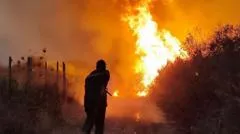
The Algerian national assembly has voted to implement capital punishment for individuals found guilty of arson involving forests, woods, or agricultural fields. This move follows a series of devastating wildfires that ravaged various regions of the country during an intense heatwave in northern Africa. Under the direction of President Abdelmadjid Tebboune, the justice ministry was tasked with revising the criminal law to address these specific threats to national security and environmental stability.
Beyond arson, the new bill expands the scope of capital offences to include child abduction in cases involving torture, sexual assault, or mutilation. While the death penalty has historically existed within the Algerian penal code for various crimes, the country has not carried out an execution since 1993. The introduction of these harsher penalties represents a significant pivot in the country's judicial application of the death penalty.
The legislative process is currently moving through the upper house, the Council of the Nation. Once their review is complete, the law awaits official ratification by the president to become fully enforceable. This legal hardening reflects a state response to what officials describe as a critical escalation in criminal activity.
Criminalizing organized arson and foreign links
Justice Minister Lotfi Boudjemaa stated to parliament that the adoption of the death penalty for these specific acts serves as the necessary legal response to curb rising crime rates. According to news agency AFP, Boudjemaa argued that the severity of the penalties is justified by the fact that arson has escalated to the level of organized crime.
The government's stance is bolstered by ongoing investigations into the origins of the recent blazes. According to the Justice Minister, there are indications suggesting links between these arson attacks and "foreign parties." This assertion places the wildfires within a broader context of national security and potential external interference, rather than treating them solely as environmental accidents or isolated criminal acts.
The government's strategy appears to be one of deterrence through maximum sentencing. By categorizing arson as a form of organized crime with potential international connections, the administration is framing the protection of natural resources as a fundamental component of state sovereignty and public safety.
Discrepancies in wildfire casualty reporting
Significant gaps exist between official government figures and independent reporting regarding the human cost of the recent wildfires. While the official death toll from the blazes is recorded at 12, independent news outlets and investigative journalists suggest the actual number of fatalities is considerably higher.
Investigative journalist Nozha Khelalef has provided an alternative perspective on the tragedy. According to the independent news website Twala, Khelalef's tally, which is compiled from death notices posted by families and information provided by local authorities, places the death toll at 200. This massive discrepancy highlights the difficulties in verifying casualties in the wake of large-scale environmental disasters.
The divergence in data points to a complex situation on the ground. While the state maintains a lower figure, the work of independent journalists attempting to track individual names through community notices suggests a much deeper humanitarian crisis. These figures are critical for understanding the true scale of the devastation caused by the more than 100 fires that struck the north-east of the country.
Climate change and environmental vulnerability
The intensity and frequency of these wildfires are being exacerbated by the ongoing effects of climate change in the region. Although Algeria is accustomed to seasonal forest fires during the summer months, the recent extreme weather patterns have increased the severity of the outbreaks.
The combination of intense heatwaves and high-frequency fires creates a cycle of vulnerability for the country's northern regions. As temperatures rise and weather patterns become more unpredictable, the risk of both accidental and intentional fires increases. This environmental reality provides the backdrop for the government's decision to treat arson with the highest level of judicial severity.
The intersection of environmental instability and criminal activity presents a dual challenge for the Algerian state. Addressing the immediate threat of arson through legal reform is one approach, but the underlying driver of increased fire intensity—a changing climate—remains a long-term systemic issue that complicates national disaster management efforts.
Frequently Asked Questions
What specific crimes now carry the death penalty in Algeria?
The new law imposes the death penalty for arson involving forests, woods, or fields. Additionally, it extends capital punishment to child abduction cases that involve elements of torture, sexual assault, or mutilation. These changes aim to address what officials describe as organized criminal activity.
How many people died in the recent Algerian wildfires?
There is a significant difference between official and independent reports. The official death toll stands at 12. However, according to investigative journalist Nozha Khelalef via the website Twala, the estimated death toll could be as high as 200 people.
When was the last execution carried out in Algeria?
Although the death penalty has been part of the Algerian penal code for various offences for a long time, the country has not actually carried out an execution since 1993. The recent legislative changes mark a significant shift in judicial policy.
Conclusion
Algeria's decision to introduce the death penalty for arson and certain child abductions marks a dramatic escalation in the nation's legal response to social and environmental crises. By framing arson as organized crime with potential foreign involvement, the government is treating environmental protection as a matter of national security. However, the massive discrepancy between the official death toll of 12 and the 200 deaths reported by independent sources remains a point of contention. As climate change continues to intensify the severity of wildfires, the tension between state-led legal deterrence and the reality of environmental and humanitarian devastation will likely remain a central issue in Algerian politics.