How many Aldabra giant tortoises live on Aldabra Atoll?
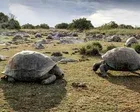
A recent scientific survey has confirmed that approximately 180,000 Aldabra giant tortoises inhabit Aldabra Atoll in the Seychelles. This figure represents the highest number ever recorded for the species and indicates a robust, thriving population. The study, which was published in the journal Ecology and Evolution, provided a best estimate of nearly 183,000 adult and sub-adult tortoises.
The data was compiled by a research team that analyzed five years of tortoise counts conducted between 2018 and 2022. This research provides the first significant population update since the late 1990s, when a widely cited estimate placed the population at roughly 100,000 individuals. By comparing these figures, scientists can see a clear trajectory of growth and stability for the species.
The scale of this population is notable not just for its biological significance, but for its demographic dominance on the atoll. The number of tortoises currently roaming the island significantly exceeds the total human population of the Seychelles. This makes Aldabra Atoll a unique ecological stronghold for one of the world's most iconic reptile species.
What is the history of the Aldabra giant tortoise recovery?
The current population of Aldabra giant tortoises is the result of a long-term conservation effort that reversed a near-extinction event. In the 19th century, the species faced extreme pressure due to human exploitation, which reduced their numbers to fewer than 1,000 individuals on the island.
To prevent the total loss of the species, several critical conservation milestones were achieved during the latter half of the 20th century:
- 1981: Aldabra Atoll was designated as a strict nature reserve.
- 1982: The atoll was recognized as a UNESCO site, providing international protection.
- Long-term monitoring: Continuous tracking by local and international organizations has allowed for data-driven management.
Dr. Frauke Fleischer-Dogley, the CEO of the Seychelles Islands Foundation (SIF), noted that the presence of over 180,000 tortoises is direct evidence of what long-term commitment to conservation can achieve. The recovery is now regarded as one of the most significant conservation success stories in the Indian Ocean region.
Comparing global tortoise populations
While the Aldabra population is massive, it is not the only one in existence. Aldabra Atoll is one of only two locations globally where giant tortoises can be found in the wild. The other significant population resides in the Galápagos Islands, though the Aldabra group is notably larger in terms of its free-roaming numbers.
How did researchers conduct the population survey?
Researchers utilized advanced modeling techniques to overcome the logistical challenges posed by the atoll's environment. Because Aldabra Atoll features exceptionally dense vegetation, traditional visual counting methods are often insufficient to capture a complete picture of the population.
Dr. Nancy Bunbury, a co-author of the study, explained that the team had to model what they could not see in addition to the tortoises they did observe. This methodology allowed the researchers to produce what they describe as the most reliable baseline to date for the species. This benchmark is intended to serve as a foundation for tracking population changes over the coming decades.
The study's reliance on a five-year data window (2018–2022) ensures that the findings are not merely a snapshot of a single year, but rather a reflection of a stable population trend. This longitudinal approach is essential for distinguishing between temporary fluctuations and genuine demographic shifts.
What environmental threats face the tortoise population?
Despite the record-breaking numbers, scientists warn that the population remains vulnerable to several escalating environmental pressures. The study authors emphasize that the current high population count should be viewed as a baseline for future management rather than a permanent endpoint.
The primary threats identified by the research team include:
- Climate Change: Predictions suggest the Seychelles will face longer and more frequent droughts. These droughts could reduce the availability of food and the shade necessary for tortoise survival.
- Rising Sea Levels: As a low-lying atoll, Aldabra is particularly susceptible to rising sea levels, which threaten to submerge critical habitats.
- Invasive Species: Mammals such as feral cats and black rats continue to pose a danger to the next generation of tortoises by preying on eggs and hatchlings.
Dr. Dave Hudson, a postdoctoral research associate at the University of Exeter, highlighted that these numbers provide the evidence needed for conservation managers to act early. He noted that as tortoises face increasing pressures from drought and invasive species, proactive intervention will be vital to maintaining their current trajectory.
Strategies for future protection
One of the most actionable solutions proposed by the study involves the eradication of invasive mammals. Researchers suggest that successfully removing remaining feral cats and rats could remove the final significant barriers to further population growth. By eliminating these predators, the survival rate of hatchlings could increase significantly, helping the species become more resilient to the broader impacts of climate change.
Frequently asked questions
How many tortoises were on Aldabra in the 1990s?
In the late 1990s, the population of Aldabra giant tortoises was estimated to be approximately 100,000. The new survey shows that the population has grown significantly since that time, reaching nearly 180,000 individuals in the current period.
Is the Aldabra tortoise population stable?
Yes, according to the study published in Ecology and Evolution, the population was found to be relatively stable during the five-year period between 2018 and 2022. The researchers provided a best estimate of approximately 183,000 adult and sub-adult tortoises.
What is the main threat to tortoise hatchlings?
The primary threat to tortoise eggs and hatchlings comes from invasive mammals. Specifically, feral cats and black rats prey on the young, which can prevent the population from reaching its full growth potential if these predators are not managed.
Why is counting tortoises on Aldabra difficult?
Counting the tortoises is challenging because of the dense vegetation found across the atoll. This environment makes it difficult for researchers to see all individuals, requiring them to use complex modeling to estimate the numbers they cannot directly observe.
What role does climate change play in this study?
Climate change is expected to cause longer and more frequent droughts in the region. These droughts threaten the tortoises by reducing the amount of food and shade available, while rising sea levels threaten the low-lying areas of the atoll habitat.
Key takeaways
- The Aldabra giant tortoise population has reached an estimated 180,000 individuals.
- This figure represents a massive recovery from fewer than 1,000 tortoises in the 19th century.
- Aldabra Atoll is one of only two places where wild giant tortoises exist.
- Invasive species like rats and cats remain a significant threat to hatchling survival.
- Climate change and rising sea levels pose long-term risks to the atoll habitat.
The path forward for Aldabra conservation
The discovery of 180,000 Aldabra giant tortoises is a landmark achievement in wildlife biology, proving that dedicated conservation efforts can successfully reverse the course of extinction. However, the transition from a recovery phase to a long-term stability phase requires constant vigilance. As the Seychelles faces the dual challenges of invasive species and a changing climate, the data provided by the University of Exeter and the SIF will be indispensable. Protecting this iconic species will depend on the ability of conservationists to address these emerging environmental pressures before they undermine decades of progress.